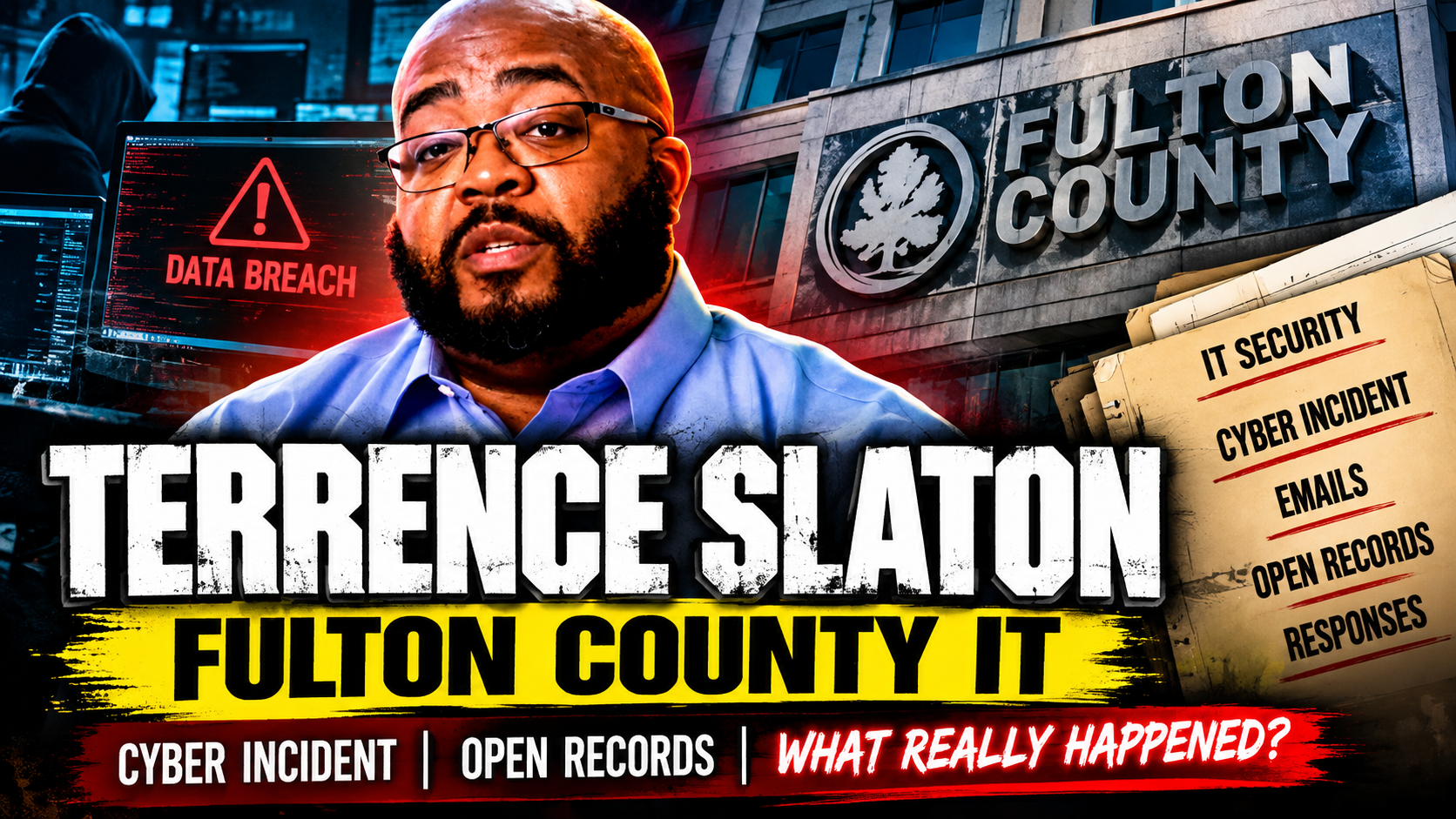

SHIELDS OF SHAME | INVESTIGATIVE REPORT
Fulton County Cyberattack: The Varonis Video, Merchant Law Firm Litigation and the Open Records Trail
A records battle spanning 2023–2026: more than a hundred communications, disputed productions, the Merchant litigation, and a county cyber incident whose technical records remain contested.
In January 2024, Fulton County reported a ransomware incident disrupting government services. Shields of Shame is examining the county’s explanations against a November 2023 Varonis video featuring Chief Information Security Officer Terrence Slaton, public reporting and county records responses. The materials raise questions, but do not prove that the attack was fabricated.
SHIELDS OF SHAME INVESTIGATION · FULTON COUNTY · 2023–2026
The Fight for Fulton County Records
One journalist. Seventeen requests. A five-month wait for a cyberattack answer. And a court battle that showed how another requester was treated when the District Attorney’s Office faced scrutiny.
The portal uses account sessions; an individual session-coded address can expire. Use the main portal above to submit requests, track them or review old responses.
The story nobody gets from a status label
My fight with Fulton County did not begin with ransomware. In June 2023, I asked for records concerning Ronnie Bernard Wyatt Jr.: a service photograph, public complaints, discipline, arrests, personnel records and the first page of use-of-force reports. The request moved from a straightforward question to a dispute over identifying the correct person. Even after I supplied information, the portal eventually labeled my original request withdrawn. The correspondence I retained did not contain an explicit withdrawal by me.
I submitted the request again. The county eventually released a redacted personnel file, but I was left with the same question every records requester should ask: did the county provide every category I requested, or did “complete” simply mean the portal ticket was closed? That became a recurring issue with footage, personnel requests and technical records from different Fulton County offices.
By July 2024, I was requesting body-camera footage and reports. Sometimes I got files; other times I was sent to another agency, told records were exempt, or asked to clarify details. None of those responses is automatically unlawful. What I began documenting was the process itself: the dates, the labels, the shifting explanations and the gaps between an announced production and the specific materials I had asked for.
Then I began examining the District Attorney’s Office. On September 29, 2024, I asked about its relationship with Critical Mention, a media-monitoring vendor. On September 30 I narrowed the request to the contract. The county’s file list eventually showed emails and a redacted invoice; it did not identify a contract by filename. That alone does not prove a missing contract, but it was enough to justify opening the files and asking more questions.
On October 1, I asked for emails between Terrence SlatonTerrence Slaton · view profile, Fulton County’s Chief Information Security Officer, and Dexter Bond Jr.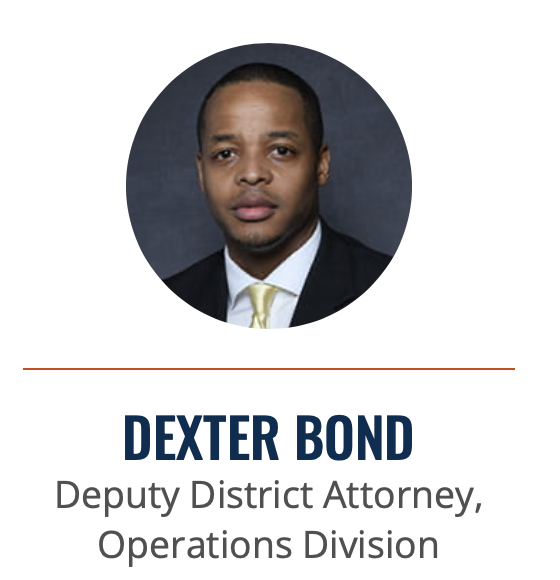 Dexter Bond Jr. · view profile, a District Attorney’s Office records custodian and deputy. Fulton County required keywords even though my request named both participants and a date range. Later, an IT search estimate quoted $29.79 an hour, but the final invoice used $51.53 an hour. The bill totaled $38.65. The arithmetic is not the mystery. Why did the rate change, and which search was actually run?
On October 2, 2024, I emailed Slaton directly about a much larger question: Fulton County’s January cyberattack. He had appeared in a cybersecurity company’s video published in November 2023 describing sensitive information exposed by broken permissions. I wanted the logs and an existing incident explanation. Slaton directed me to the county’s portal. My formal request then spent 146 days in a chain of updates. Mystical Studaway Mystical Studaway · view profile, a paralegal in the Office of the County Attorney, appears throughout the request correspondence.
On February 18, 2025, the county was still saying it was checking with IT to determine whether responsive records existed. On February 26, it said the logs were gone under a 31-day retention policy. I got monthly website traffic counts, not the server, access and audit records I had asked to examine. The county’s retention explanation may be accurate; by October 2024 most of the requested dates were already outside 31 days. But a 146-day process to find out what the retention rule was is itself part of the public-interest story.
“Complete Records Released” is a portal label. It is not the same as a category-by-category audit showing exactly what existed, what was delivered, and what was withheld.
The parallel battle: The Merchant Law Firm
While I was documenting my own request history, lawyers Ashleigh and John Merchant were fighting over access to records from Fani Willis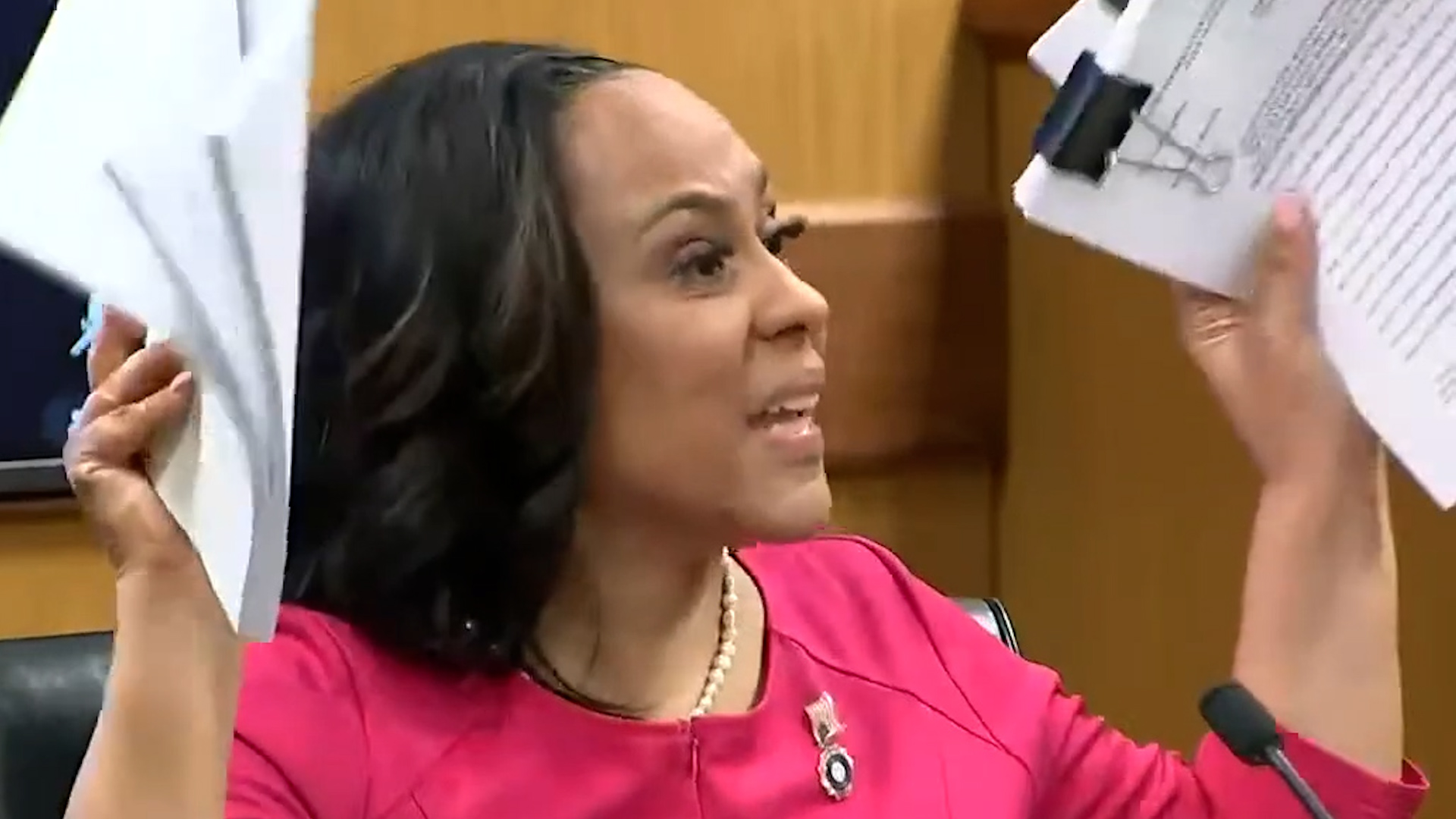 Fani Willis · view profile‘s District Attorney’s Office. The Merchant Law Firm’s lawsuit, 24CV001325, involved information about hiring, nondisclosure agreements, spending and a media-monitoring company. The fact that I requested Critical Mention records does not make my request part of that lawsuit. It does give us a specific pair of productions to compare.
At 2024 hearings, Judge Rachel Krause Judge Rachel Krause · view profile questioned the DA’s handling of records. Testimony about an “Ashleigh Merchant Rule” described differential treatment of Merchant’s requests. In March 2025, Krause found violations and awarded $54,103.23 in fees and costs. County representatives disputed the allegations and the office indicated it would appeal. That judgment concerns the Merchant case; it does not establish a legal finding in my requests.
I also created a five-part video series from public hearing livestreams. The original videos, their context and the judge’s channel are linked below. I want readers to hear the exchanges for themselves, rather than accept an edited quote in isolation.
Another point requiring proof: I believe that I received the same modified Critical Mention material disputed in the Merchant matter. Until my production is matched page by page to the Merchant exhibits and any original version, that is an investigative comparison to finish, not an established court finding. The precise extent to which the DA invoked the cyberattack as a reason for delays also belongs next to the transcript or order where it was said.
The cyberattack: a story with several competing records
Robb Pitts Robb Pitts · view profile publicly described the January 2024 disruption as ransomware. LockBit later claimed responsibility and posted screenshots resembling county records. Cybersecurity reporting documented threats to publish data, a disappearing ransom countdown and denials that Fulton County paid. Those events are more concrete than a bare press release, but they still do not reveal the complete entry point, timeline or forensic findings.
In October 2024, CIO Kevin Kerrigan Kevin Kerrigan · view profile said an employee with elevated privileges clicked malicious material, allowing attackers to move through the infrastructure. County Manager Dick Anderson
 Dick Anderson · view profile dealt with the county’s recovery. A later official 2025 financing disclosure stated that environments hosting the tax, justice, telephone and financial systems were encrypted. That is a substantive government assertion about system impact, not merely a rumor.
Now compare that with the pre-incident Varonis video: Slaton describes broad internal permissions and a remediation effort. These things can coexist with an attack; closing one permissions issue does not make a ransomware intrusion impossible. The unanswered question is whether the previously identified weakness was related to the later compromise and what the county’s technical reports actually found.
A separate 2025 lawsuit filed by former IT manager Omotade Adeniyi alleged the intrusion began in early December 2023 and was not discovered until January 2024. That is an allegation in employment litigation, not a forensic conclusion. It is worth testing against incident tickets, access-control records, endpoint alerts, law-enforcement reports, backup inventories and the written Varonis remediation history.
The reporting standard: My skepticism is a reason to investigate. It is not itself proof that the attack was fabricated. Outages, apparently genuine stolen documents and the county’s encryption disclosure are evidence that cannot be brushed aside. The task is to reconcile the full technical record, the public statements and the delays in access to records.
THE PEOPLE IN THE RECORD
Who is who: County officials, attorneys, witnesses and staff
These cards identify public roles and documented involvement, not a list of people accused of wrongdoing. The captions separate direct participants in my requests, the Merchant litigation, cyberattack briefings, and officials whose connection is institutional background only. Photograph source: Shields of Shame’s supplied WordPress media files; identify roles from records or credited independent reporting.
Hover over a highlighted name in the story for its photograph, or tap the name to jump to the person’s profile. On touchscreens, tapping opens the profile. A portrait is an identification aid, not evidence of misconduct.

Sandy MonroeView this profile
Assistant County Counsel. Signed and served September 2024 filings for the defendants in the Merchant Open Records lawsuit. Her role was representing the government in court, not answering the journalist’s technical-log request.
Source: View filed motion
Jazmin WillinghamView this profile
Fulton County prosecutor identified as a Senior Assistant District Attorney in county materials and reporting. No specific role in the Merchant records case or the Shields of Shame requests has been established. Not to be confused with Erica Willingham in the Slaton/Bond emails.
Source: County bio
Jazmin DilligardView this profile
Assistant District Attorney identified in news coverage and county publications; worked on prosecution and internship programs. The supplied image filename says executive assistant, but public sources describe prosecutorial work. No documented role in the cyberattack or Merchant records handling.
Source: Prosecution reporting
Keven Armstrong (image label)View this profile
The supplied file is labeled Keven Armstrong. A DA publication identifies an Appeals attorney as Kevin Armstrong. Until the photo and identity are matched to an authoritative source, this card does not assume they are the same person or attribute any involvement in this litigation.
Source: Check county reference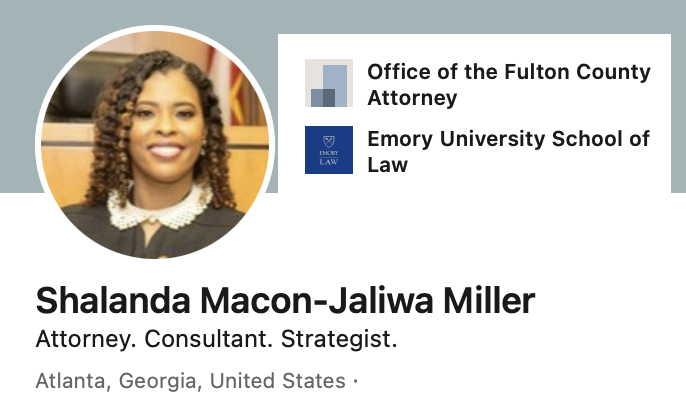
Shalanda Macon-Jaliwa MillerSee profile
Deputy County Counsel, named in the government’s September 2024 motion in the Merchant case. The legal record spells her first name Shalanda; the supplied photograph filename spells Shalandra. She is county counsel, not a DA prosecutor.
Filed representationDexter Bond Jr.See profile
Deputy District Attorney, Operations Division, listed as custodian of records in a February 2024 business-record certification. Testified during the Merchant open-records case and appears in September 2024 electronic-record retrieval correspondence obtained by Shields of Shame.
Court testimony report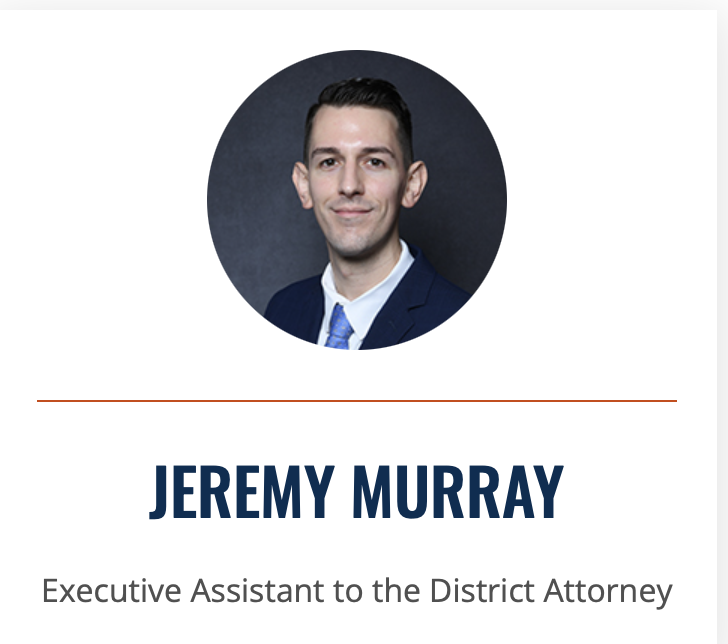
Jeremy MurraySee profile
Deputy Executive Assistant to the District Attorney, according to the county’s executive biography. Featured to explain the office’s organizational structure; the provided request/pleading records do not place him in the cyberattack response or Merchant request decisions.
Official county profileMystical StudawaySee profile
Paralegal for Fulton County’s Open Records Team in the 2024–25 correspondence. Sent acknowledgments and multiple deadline extensions on Shields of Shame’s cyberattack-log request. Also appears in Merchant-related records, including a notarized business-record certification. Not a prosecutor.
Read her responses in SOS archive
Pallavi BaileyView profile
Listed in county material as communications director in the District Attorney’s media relations team. No direct involvement in Shields of Shame’s open-records requests, the Merchant records decisions or the cyberattack is established.
Related source: County biography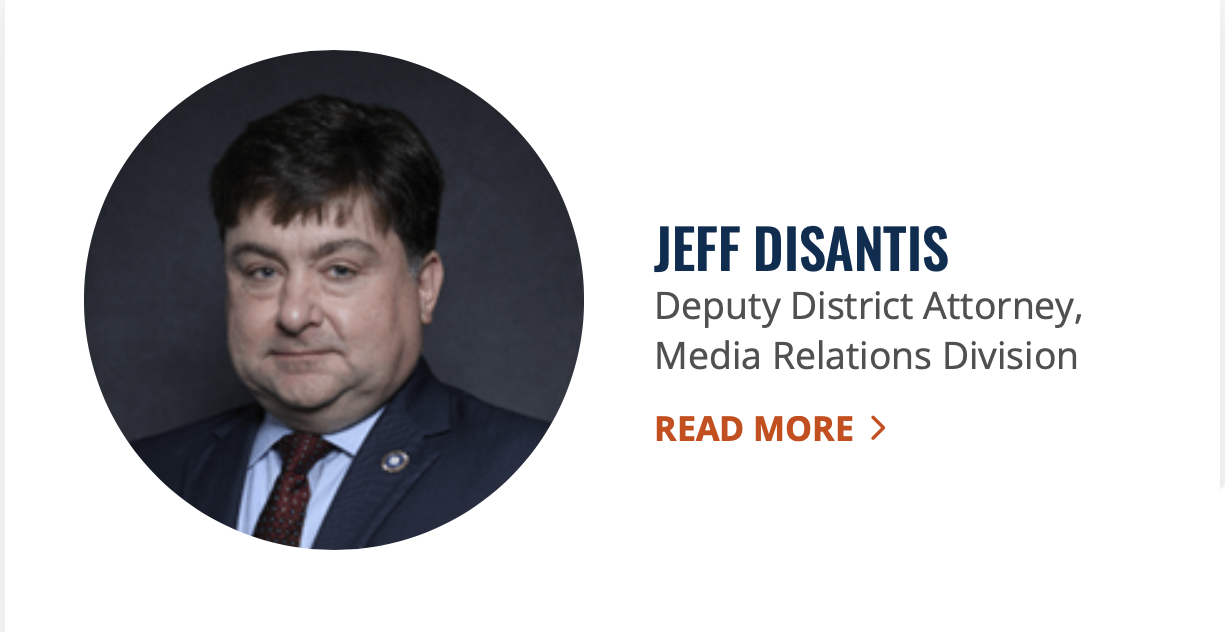
Jeff DiSantisView profile
Deputy District Attorney overseeing media relations. He publicly disputed allegations in the Merchant open-records dispute in January 2024, saying the office had provided records it believed were required and was compiling more. A media response is not the same as a records-processing decision.
Related source: Associated Press coverageFani WillisView profile
Elected DA and head of the office named in the Merchant open-records litigation. Counsel argued she lacked direct personal knowledge of the processing of the specific requests; the judicial rulings concern the office’s obligations and should not be represented as a finding that Willis personally caused the delays.
Related source: Motion to quashRobb PittsView profile
County commission chairman who publicly addressed the January 2024 cyber incident, LockBit’s demands and the county’s assertion that it did not pay a ransom.
Related source: Contemporary reportingKevin KerriganView profile
In October 2024 Kerrigan said an employee with elevated privileges clicked malicious content, allowing attackers to move through county infrastructure. This explanation should be compared with forensic records and the pre-incident Varonis assessment.
Related source: Interview and reportingDick AndersonView profile
Discussed the cyber incident’s operational disruptions, restoration work and modernization of county systems. Public reporting says an ERP software upgrade had already been planned before the incident.
Related source: Recovery spending reporting
Bridget ThorneView profile
Discussed the reported ransomware incident and communication among county leadership in public reporting. No role in processing the journalist’s requests has been established.
Related source: News interviewJudge Rachel KrauseView profile
Presided over the Merchant Open Records Act dispute, heard evidence about request handling and entered findings leading to the March 2025 attorney-fee award. The judge is an independent judicial actor, not a county records employee.
Related source: Merchant ruling reportingTerrence SlatonView profile
Appeared in the November 2023 Varonis security-assessment video and received Shields of Shame’s October 2024 direct questions. He directed the journalist to Fulton County’s records portal; the supplied reply did not substantively explain the reported cyber intrusion.
Related source: Shields of Shame investigationNovember 2023: A security problem before the incident
In the video A Varonis risk assessment helped this org get their data under control, Slaton describes sensitive data accessible across a department because of broken permissions, discovered early in Varonis deployment. He discusses tightening access. Shields of Shame preserved a copy and reports that the original was subsequently removed; the reason for removal is not independently verified.
January–October 2024: Competing explanations
Fulton County announced a cybersecurity incident in January 2024. LockBit later claimed responsibility. County officials, including Chairman Robb Pitts, publicly discussed ransomware. In October 2024, CIO Kevin Kerrigan attributed the initial breach to an employee clicking malicious material while holding elevated privileges. A permissions weakness and an external intrusion could coexist; their connection requires forensic evidence.
The original Shields of Shame records request
R011151-100324, October 3, 2024: After emailing Slaton directly, the journalist was referred to the county records portal. The original request questioned the scope of the January incident, cited the Varonis video, and sought District Attorney webpage access, error, audit, transaction, security, event and applicable version-control logs for December 2023 through March 2024, along with webpage records through September 2024.
The county’s 31-page message history contains 17 messages and repeated extensions. On February 18, 2025, it said IT was still determining whether responsive documents existed. On February 26, 2025, the county said the requested logs were no longer available because the relevant retention policy was only 31 days. The final response came 146 days after the request. The logs were already older than 31 days when requested, so the response does not prove post-request destruction.
The county also supplied monthly traffic figures for its District Attorney webpage: December 2023, 5,247; January 2024, 16,194; February, 39,223; March, 27,125. These figures do not establish whether ransomware occurred.
Other requests, invoices and fees
R011062-100124: A separate October 31, 2024 IT email-search invoice listed $38.65. September 2024 correspondence shows Slaton discussing email and metadata retrieval through the county helpdesk in a separate litigation-related matter. A District Attorney’s Office acknowledgment requested 30 business days for review. These materials are part of the records-access history, not proof of a fabricated cyberattack.
The Merchant Law Firm, Critical Mention and the lawsuit
The Merchant Law Firm litigated Georgia Open Records Act disputes with the Fulton County District Attorney’s Office involving, among other materials, Critical Mention media-monitoring records. In March 2025, Judge Rachel Krause ruled against the office and awarded more than $54,000 in attorneys’ fees and litigation expenses. Shields of Shame reports independently requesting the same Critical Mention documents and receiving a modified report. That comparison requires the actual productions and court exhibits before a definitive document-by-document finding can be published.
Merchant original complaint March 2025 court ruling
THE CAMERA WAS ROLLING
Watch the court hearings, not just the headlines
Five videos produced by Shields of Shame from livestreamed public court proceedings. These clips are presented in the order supplied. The footage is relevant to the Merchant litigation and the DA’s handling of records. Descriptions here do not substitute for the original transcript or docket; readers should review full context before attributing a statement to any participant.
Part 1 | Hearing footage
Shields of Shame’s part 1 installment from the public hearing recordings. Watch the court proceedings directly, then compare the statements with the written requests and judicial orders.
Open original on YouTubePart 2 | Hearing footage
Shields of Shame’s part 2 installment from the public hearing recordings. Watch the court proceedings directly, then compare the statements with the written requests and judicial orders.
Open original on YouTubePart 3 | Hearing footage
Shields of Shame’s part 3 installment from the public hearing recordings. Watch the court proceedings directly, then compare the statements with the written requests and judicial orders.
Open original on YouTubePart 4 | Hearing footage
Shields of Shame’s part 4 installment from the public hearing recordings. Watch the court proceedings directly, then compare the statements with the written requests and judicial orders. This embed starts at the supplied timestamp.
Open original on YouTubePart 5 | Hearing footage
Shields of Shame’s part 5 installment from the public hearing recordings. Watch the court proceedings directly, then compare the statements with the written requests and judicial orders. This embed starts at the supplied timestamp.
Open original on YouTubeJudge Rachel Krause | Full livestream archive
The judge’s original YouTube streams are the place to cross-check continuity, exact timestamps and the full context behind the five edited parts. This channel link is an archive, not a claim that each stream concerns the Merchant case.
Browse the judge’s full livestreamsFull Fani Willis and Nathan Wade testimony
Separate testimony concerning the election-interference prosecution and disqualification controversy. This is background for the wider Fulton County story, not a hearing in your public-records request or the Merchant civil Open Records case.
Open full testimonyThe removed Varonis video, preserved
Title reported on original YouTube page: “A Varonis risk assessment helped this org get their data under control.” Shields of Shame preserved the original segment before/after the public removal. The transcript describes widespread access to sensitive files through broken permissions and an early remediation effort. It does not describe the January 2024 compromise in technical detail.
Open archived Varonis recording · Original YouTube URL (reported removed)
The November 2023 publication date and the assertion that the video was removed after Shields of Shame’s reporting come from the investigator’s preserved records; they should not be mistaken for a vendor statement explaining removal.
How to use the courtroom footage
The five-part video chapter above links to the supplied recordings and their original YouTube URLs. Check the judge’s full livestream archive for surrounding context, exact hearing dates and transcripts; never treat an edited clip as the complete court record.
Evidence inventory and files still to add
This page already reproduces the 17-request register, major messages, fee comparisons, Merchant chronology and the preserved Varonis segment. Original portal PDFs and email exports supplied to this investigation include R011151-100324, R011062-100124, the 31-page message history and the 42-page consolidated audit. Document download buttons will be added when the files are placed in the site’s media library and their public URLs are confirmed. The most important remaining comparison is between the actual Critical Mention productions and exhibits, not just their filenames.
NEW INVESTIGATIVE CHAPTER | PRIMARY-RECORDS RECONSTRUCTION
Every Fulton County request, reconstructed from the portal
This is not a PDF embed or a list of assertions. The following register is built directly into this report from a 42-page review of Fulton County’s signed-in request portal and related Gmail messages, covering June 2023–November 13, 2026. It documents 17 requests, 124 portal entries (17 creation events plus 107 communications), 12 additional Gmail communications, and 136 distinct entries after duplicates were removed. Eighty-five portal communications matched a Gmail message. All times in the underlying review use America/New_York.
Requests audited
Unique communications/events
Extensions on the cyber request
Calendar days to cyber-request answer
How to read the register: The statuses are the portal’s labels, not independent proof of completeness. The day count is calendar days from the request to its last portal entry; asterisks indicate requests still open as of November 13, 2026. Attachment names and release notices were inventoried, but the underlying contents of every attachment were not independently verified.
| Tracking number / filed | Original requested material | Portal status / activity | Named production / fee | Evidence-based analysis |
|---|---|---|---|---|
| R004223-061423 Jun 14, 2023 |
Ronnie Bernard Wyatt Jr. Service image; complaints; discipline; arrest history; personnel/application; first page of every force report. |
Withdrawn (portal label) 6 entries · 0 extensions · 20 days |
Image.jpeg; no full personnel production shown. | After June 23 identification reply, July 3 closure cited unanswered clarification; portal labels withdrawal, but express withdrawal not found. |
| R004798-070423 Jul 4, 2023 |
Ronnie Wyatt Jr., renewed Repeat personnel, complaints, discipline, arrests, force reports; reference to original request. |
Complete (portal label) 13 entries · 3 extensions · 31 days |
Redacted Wyatt personnel file; fact sheet; portal image. | Aug 4 personnel release; request’s other categories not individually reconciled. HR questioned identity despite POST fact sheet. |
| R005357-072123 Jul 21, 2023 |
Wyatt, South Fulton footage Body cameras for four specified 2019–20 South Fulton PD cases. |
No responsive records 4 entries · 0 extensions · 3 days |
None identified. | Directed to City of South Fulton July 24; county was not shown as custodian. |
| R009549-110123 Nov 1, 2023 |
DA declined prosecutions List of cases declined in 2019–22 with names, charges and court case numbers. |
No responsive records 3 entries · 0 extensions · 5 days |
Letter_to_requesters.docx listed. | Nov 6 response says the requested list was not held; creating a new compilation may not be required. |
| R008099-072524 Jul 25, 2024 |
Raeshad Tramond Campbell Sep 13, 2021 arrest BWC/dashcam for every officer; booking photo; narrative/report. |
Complete (portal label) 5 entries · 0 extensions · 7 days |
Arrest report; affirmation and image-related files. | Aug 1 release after affirmation. Attachment names alone do not verify requested videos were delivered. |
| R008499-080424 Aug 4, 2024 |
Glenn Castro footage Feb 7, 2020 Johns Creek incident; all BWC; interrogation audio/video. |
No responsive records 5 entries · 2 extensions · 9 days |
No attachments shown. | Two near-duplicate Aug 11 extensions two minutes apart; county referred requester to responding agency Aug 13. |
| R010986-092924 Sep 29, 2024 |
Critical Mention / DA Originally all records of Critical Mention relationship: emails, texts, calls; narrowed Sep 30 to contract. |
Complete (portal label) 5 entries · 1 extensions · 4 days |
Critical_mentions_emails.pdf; criticalmentioninvoice_Redacted.pdf. | 30-business-day template was followed by Oct 3 release; file names do not identify an actual contract. |
| R011062-100124 Oct 1, 2024 |
Slaton / Dexter Bond emails All emails between these named officials, Jan 1–Oct 1, 2024. |
Payment not received 13 entries · 3 extensions · 34 days |
Search_1_Export__R.pdf; Search_2_export_R.pdf; $38.65 invoice. | County insisted on keywords; rate changed from $29.79 to $51.53/hour; Nov 4 upload announced despite zero-balance/payment labels. |
| R011148-100324 Oct 3, 2024 |
DA system and network logs Dec 2023–Mar 2024 DA webpage, network/shared-drive, computer/system access and technical logs. |
No responsive records 9 entries · 4 extensions · 74 days |
No attachments shown. | DA reported none Nov 20; IT reassignment and Dec 9 review; Dec 16 technical-record unavailability. |
| R011151-100324 Oct 3, 2024 |
Cyberattack and DA logs Scope of Jan 2024 incident; Varonis video; access/error/audit/transaction/security/event/version-control logs. |
Complete (portal label) 17 entries · 12 extensions · 146 days |
No responsive technical logs; only monthly DA webpage traffic totals. | Feb 18 still checking; Feb 26 invokes 31-day retention. Twelve extensions and complete-status label despite missing log categories. |
| R003399-031425 Mar 14, 2025 |
Monique Clark incident footage Jun 5, 2023 detention incident; interior/BWC/audio; service image, complaints, first pages of force reports. |
Needs attention 10 entries · 4 extensions · 41 days |
Five camera/media/archive files listed. | Apr 17 production, Apr 21 missing-category objection; Apr 23 clarification; Apr 24 second release, status remains inconsistent. |
| R003815-032125 Mar 21, 2025 |
Timothy John Kelly arrest BWC of Feb 24, 2022 arrest. |
No requester response 4 entries · 0 extensions · 15 days |
None shown. | DOB clarification Mar 26; Apr 5 closure said ten business days, but only ten calendar days elapsed. |
| R008453-061925 Jun 19, 2025 |
Khadijah Solomon taser All 2025 taser deployment video; service photo; Garrity/Miranda interviews and warnings. |
Records exempt 5 entries · 1 extensions · 13 days |
None shown. | July 2 blanket pending-investigation exemption needs category-specific review, including photo. |
| R015595-103025 Oct 30, 2025 |
Demarcus Whatley records Discipline, public complaints, first force report pages and previously released BWC. |
No requester response 9 entries · 3 extensions · 81 days |
No attachment listed; Jan 19 IA-summary upload was mentioned. | Jan 18 closure followed by Jan 19 announced file upload; conflicting activity and missing link. |
| R015616-103025 Oct 30, 2025 |
Monique Roschelle Clark Service image, personnel and disciplinary records. |
Complete (portal label) 8 entries · 4 extensions · 86 days |
Detention_Monique_Clark.pdf; M_Clark_R.pdf. | Partial Jan 19 and final Jan 24, 2026; four backlog notices over 86 calendar days. |
| R017153-101926 Oct 19, 2026 |
Louis Brown III jail footage All Jun 4, 2025 BWC for Brown and on-duty detention staff; roster, force reports, complaints. |
In progress 4 entries · 2 extensions · 18* days |
No attachment identified. | Two backlog notices; Nov 20, 2026 stated next update. Open 25 days as of Nov 13 review. |
| R017499-102326 Oct 23, 2026 |
AXON 4 D01A25313 All Jun 4, 2025 footage for named camera; deputy identity, photo, discipline and complaints. |
In progress 4 entries · 2 extensions · 20* days |
No attachment identified. | Nov 12 update moved next date to Nov 30, 2026 but called it Thursday; Nov 30 is Monday. Open 21 days. |
*For open 2026 requests, 18 and 20 days refer to last recorded entry, not closure; their ages as of the review were 25 and 21 days respectively. A listed file does not guarantee that the requested footage or all categories were actually produced.
Inside the 146-day cyberattack-records delay
R011151-100324: October 3, 2024 to February 26, 2025. The county sent 12 additional-time notices. These generally promised another update, not a specific date when the technical logs would be produced. Of the 12 sequences, eight next recorded county responses occurred after the date identified in the preceding notice; the October 25 message arrived on the identified day but after its specified 5 p.m. time. This comparison uses recorded messages and does not prove that some uncollected contact did not occur.
| Extension notice | Next stated response date | Next response actually recorded | Calendar comparison | What the notice said |
|---|---|---|---|---|
| Oct 8, 2024 | Oct 17 | Oct 16 | 1 day early | IT queue; 7-business-day update |
| Oct 16 | Oct 25 | Oct 25 | Same day | Another 7-business-day update |
| Oct 25 | Nov 1 | Nov 3 | 2 days late | Another 5-business-day update |
| Nov 3 | Nov 8 | Nov 12 | 4 days late | Another 5-business-day update |
| Nov 12 | Nov 21 | Nov 26 | 5 days late | 7-business-day update |
| Nov 26 | Dec 9 | Dec 16 | 7 days late | 7-business-day update |
| Dec 16 | Jan 2, 2025 | Jan 6 | 4 days late | Still in IT queue |
| Jan 6, 2025 | Jan 15 | Jan 16 | 1 day late | Awaiting IT update |
| Jan 16 | Jan 24 | Jan 27 | 3 days late | Still in IT queue |
| Jan 27 | Feb 3 | Feb 7 | 4 days late | Still in IT queue |
| Feb 7 | Feb 18 | Feb 18 | Same day | Asked IT for another update |
| Feb 18 | Feb 28 | Feb 26 | 2 days early | Still determining whether records existed |
The last two statements are the most important: On February 18, IT was still being consulted about whether responsive documents existed; eight days later, the county said the logs were unavailable due to a 31-day retention policy. Why wasn’t that retention outcome determined earlier? What exact systems and records were searched, and did incident-response copies survive separately?
Two overlapping requests, two different timetables
| Request | Scope | Agency sequence | Result |
|---|---|---|---|
| R011148-100324 | DA website, shared drives, employee network and computer-system logs, Dec 2023–Mar 2024 | Nov 20 DA says no responsive records; request moves to IT; Dec 9 says release is under review | Dec 16 IT says unavailable; portal closes after 74 days |
| R011151-100324 | Incident explanation plus DA web technical logs; other webpage information | 12 extensions; Feb 18 still checking | Feb 26 says unavailable under 31-day policy; 146 days; portal says “Complete Records Released” |
Audit interpretation: Their overlap does not make them identical. The unexplained gap between the different availability determinations merits a search-history reconciliation, not an automatic finding of deception.
What Fulton County charged: the $38.65 email-search invoice
The separate Slaton/Bond correspondence request R011062-100124 named both email participants and the January 1–October 1, 2024 period. The county demanded mandatory keyword terms on October 3 and again on October 4; the requester then supplied terms including names, the DA’s office, records requests and cyberattack language. IT ultimately announced production on November 4.
| Date / document | Charge or handling | Why it matters |
|---|---|---|
| Oct 3, 2024 records message | IT search rate $29.79/hour; first 15 minutes credit $7.45. Separate review rate $29.28/hour. | Original quoted rates and requirement for keyword narrowing are documented. |
| Oct 31, 2024 invoice | 1 hour IT email search at $51.53/hour, minus first quarter-hour credit of $12.88; amount due $38.65. | Arithmetic is consistent with 45 billable minutes at $51.53/hour after rounding. Why the hourly rate changed is not explained by the reviewed correspondence. |
| Nov 4 release / current portal | Email exports announced as uploaded; portal says “Closed — Payment Not Received,” yet displays $0.00 due and $0.00 payments. | The invoice, release notice and current ledger need reconciliation. $0.00 fields are not proof of payment or waiver. |
The legal issue is the basis for the rate, not simple arithmetic. Georgia’s Open Records Act generally limits search/retrieval/redaction charges to the pro-rated salary of the lowest paid qualified full-time employee and requires the first 15 minutes free. The requester’s commitment to a charge over $25 is distinct from mandatory prepayment rules for larger estimates. Georgia Attorney General — Open Government FAQ.
The Critical Mention overlap: what the request actually says
On September 29, 2024, request R010986-092924 sought records of the District Attorney’s relationship with Critical Mention, including emails, telephone calls and texts. On September 30, the requester narrowed the request to the contract and asked who authored a generic 30-business-day reply. On October 3, the county announced a release. The portal lists Critical_mentions_emails.pdf and criticalmentioninvoice_Redacted.pdf; it does not identify a contract by filename. That does not prove a contract was withheld, but it gives the next audit an exact target.
Shields of Shame says it also obtained the same modified Critical Mention report that the Merchant firm contested. The portal review presented here does not independently identify that report or establish that the two produced files were identical. The proper comparison is the source report, any revision history, the user’s production, the Merchant exhibit and the court’s specific ruling. Those assets will be added side by side, rather than treating an allegation as an already completed forensic comparison.
15 red flags: documented discrepancies versus potential violations
The review identifies 15 accountability questions. These labels are screening findings, not 15 proven unlawful acts. Repeated template letters, a wrong weekday or an absent attachment link can justify follow-up without establishing intentional withholding or a criminal offense.
| Finding / classification | What the records establish | What would prove or resolve it |
|---|---|---|
| RF01 Potential timing issue |
Repeated extensions R011151 received 12 notices over 146 days, mostly projecting new updates rather than definite production. |
Seek staff assignment logs, dated searches and any concrete availability estimates. |
| RF02 Potential timing issue |
Initial substantive responses First meaningful handling on selected Wyatt, log and 2025 requests appeared later than routine acknowledgments. |
Compare three business days at the time against specific messages and holidays. |
| RF03 Documented discrepancy |
31-day retention determined after 146 days Feb 18 still checking whether logs existed; Feb 26 said they were unavailable under a 31-day policy. |
Obtain written retention schedule, automated deletion rules, backups and forensic preservation records. |
| RF04 Documented discrepancy |
Overlapping technical requests handled differently R011148 was declared unavailable by Dec 16; R011151 determination came Feb 26. |
Compare exact system scope and custodians before inferring contradiction. |
| RF05 Documented discrepancy |
Withdrawn status without an express withdrawal Wyatt R004223 listed withdrawn despite June 23 requester clarification and July 3 inactivity closure. |
Get audit trail of status changes and attached identifying records. |
| RF06 Documented discrepancy |
Clarification clocks and later releases Kelly closure claimed 10 business days when 10 calendar days passed; Whatley upload announced after closure. |
Verify deadlines, staff activity and completeness of both records. |
| RF07 Potential restriction |
Keywords demanded for named email correspondents Slaton/Bond request had two named custodians and dates; county insisted on a mandatory keyword list. |
Ask what database/search limitations made keywords necessary. |
| RF08 Potential fee issue |
Hourly rate changed without explanation Quoted IT $29.79/hour; later invoice $51.53/hour. |
Request qualified staff salary records, time sheet and rate calculations. |
| RF09 Documented discrepancy |
Zero ledger vs payment-not-received label R011062 says no payment, yet zero balance, zero payments, and email exports released. |
Reconcile fee adjustments, invoice payments and release timing. |
| RF10 Completeness concern |
Complete labels vs identified records Cyber log request complete without logs; Wyatt and Campbell releases do not demonstrate every requested category. |
Audit released media and file contents against each requested category. |
| RF11 Possible overbroad withholding |
Taser request exempted under pending-case rule Solomon response cited §50-18-72(a)(4) across camera, interview and photo categories. |
Examine whether each requested category is covered and whether releasable portions exist. |
| RF12 Template concern |
30-business-day form response Critical Mention initial template requested 30 business days; release actually came four days after filing. |
Do not misrepresent this as a 30-day delay; examine specificity of initial response. |
| RF13 Documented reliability errors |
Wrong weekdays, duplicated messages and names 2026 notice called Nov 30 Thursday though Monday; near-identical notices, staff placeholders, Watts/Wyatt name mismatch. |
Templates may be error-prone; errors alone do not prove misconduct. |
| RF14 Evidence gap |
No search-versus-nonexistence trail DA said none, IT was later consulted; some replies state simply no records held. |
Seek actual searched sources, search terms, custodian names and nonexistence sign-offs. |
| RF15 Legal issue requiring evidence |
Portal routing and statutory deadline Slaton directed requests to portal; requester disputed obligation to use it. |
Georgia’s rule is generally 3 business days, not 72 clock hours; verify any properly designated records officer. |
Original request language: what was actually asked
October 2–3, 2024 — cyberattack and Varonis
The direct message to Slaton sought a scope summary of the January attack, referred to the Varonis video, and asked whether the incident was an internal permissions matter or a separate cyberattack. It named the video as published November 2023 and requested logs connected to the DA webpage. The named technical categories were access, error, audit, transaction, security and OS event logs, plus version history where applicable. A broad question asking officials to create a new explanation must be separated from the legal obligation to produce existing reports, logs and records.
September 29–30, 2024 — Critical Mention
The original request: “I am requesting all documents related to the company Critical Mention and their relationship with the Fulton County District Attorneys office. This includes, emails, phone calls and text messages.” It was narrowed the next day to the contract. The October 3 portal release listed only a Critical Mention email PDF and redacted invoice by filename. Those actual files require a complete contents audit to establish whether any signed agreement, reports or responsive communications were also present.
October 1–4, 2024 — Slaton and Bond correspondence
The submitted request sought all emails between Terrence Slaton and Dexter Bond from January 1 to October 1, 2024. The requester expressly stated that all meant regardless of subject. After the agency insisted on keywords, the requester supplied terms for both email accounts. That narrowing creates a specific question for a future audit: did the final search results capture all direct correspondence, or only messages containing one of the imposed terms?
Related court cases and independent reporting
The Merchant Law Firm v. Fulton County District Attorney’s Office — 24CV001325
The Merchant firm alleged records were improperly withheld, including information connected to media-monitoring services and government spending. Reporting on the October 21, 2024 hearing described testimony about a “Merchant Rule” for handling that firm’s requests. Judge Rachel Krause subsequently found violations in the Merchant matter and, in March 2025, awarded $54,103.23 in legal fees and expenses. The office reported plans to appeal. That judicial finding concerns the Merchant litigation, not an adjudication of Shields of Shame’s requests. A claim that the cyberattack excused Merchant production delays needs its specific transcript, date and court record before it can be presented as established testimony.
The separate Adeniyi employment lawsuit, filed September 2025
In a separate federal employment-discrimination action, former Fulton County IT manager Omotade Adeniyi alleged that hackers accessed county systems in early December 2023, before officials detected the incident in January 2024. He also alleged unequal responsibility was assigned to employees and that remediation was delayed. These are contested allegations made by a litigant, not judicial findings. This is an important additional lead because it proposes an earlier intrusion timeline; the complaint and any responding forensic evidence should be examined independently.
What the publicly documented cyber record does and does not prove
Fulton County reported widespread outages and ransomware; LockBit claimed responsibility; media coverage described purported internal documents displayed on the group’s site. The county’s 2024 financial report also discussed cyber-related recovery costs and cloud migration. Its October 2024 CIO explanation identified a malicious click by a privileged employee. These sources support the reality of substantial disruption and an official ransomware account. They do not make a full forensic investigation publicly available, or independently prove exactly when the attacker entered, what data left the network, or how earlier Varonis remediation interacted with the compromise.
Key technical distinction: Overbroad file permissions, compromised administrator accounts and ransomware encryption are different phenomena that can occur in the same incident. Neither the pre-attack Varonis video nor the later 31-day log-retention response alone establishes that the county invented an intrusion.
Georgia Open Records Act: the standard to test
Georgia law generally sets a three-business-day response/production framework, not a flat 72-hour completion deadline. Where records cannot be produced within that period, the agency has duties concerning a description and timing; exemptions require specific statutory authority. Fees are generally bounded by the lowest-paid qualified employee’s prorated salary, with the first quarter-hour free. Agencies can designate open-records officers, and the designation may affect when the statutory clock begins. The applicable wording should be evaluated as it stood when each request was made, rather than applying later amendments retroactively.
Source library: law, litigation, cyberattack and prior SOS reporting
The original portal review itself is reconstructed above so readers do not need to open a separate PDF to understand the findings. The following sources open externally, in new tabs:
- Georgia Attorney General: Open Government FAQ
Three-business-day obligations and fee guidance - Georgia Open Records Act, §50-18-71 (2025 annotated text)
Search, timing, fees, records-officer rules; check law effective at event date - Merchant Law Firm original Open Records complaint
Jan 30, 2024 pleading; allegations, not judicial findings - Judge Krause’s $54,103.23 fee ruling coverage
March 2025: actual court ruling in Merchant case - October 2024 Merchant Rule hearing reporting
WSB-TV quotes hearing evidence on request handling - Merchant court hearing with Dexter Bond
September 19, 2024 reporting; identifies witnesses and opposing arguments - Fulton County official February 14 cyber statement
County said ransomware evidence suggested financially motivated actors - CIO Kerrigan’s October 2024 explanation
Explains elevated privileges and malicious click - County’s 2024 audited financial report
Public expenditure and cyber remediation context - Separate 2025 IT employee lawsuit report
Allegations of early Dec 2023 intrusion and unequal discipline; not a finding - Shields of Shame: prior Slaton investigation
Earlier records and investigative context
Evidence still to reconcile: the complete file productions for all 17 requests, the pair of allegedly modified Critical Mention reports, exact court livestream URLs and transcripts, the IT retention policy, incident-response reports and native message metadata. Additional source buttons will be added only after their URLs and contents are checked.
FOLLOW THE DOCUMENTS · OUTBOUND AND INBOUND STORIES
The reporting, court filings and internal SOS stories behind this investigation
No generic link dump: each source below explains what it contributes and what it does not establish. External websites and internal Shields of Shame companion stories open in new tabs. Some publishers may require a subscription, and availability may change.
A primary-source account: the county’s own February 14 statement
Fulton County reported suspicious network activity, widespread outages and evidence suggesting financially motivated ransomware. It said the investigation was continuing and outside experts and law enforcement were engaged.
Read source / case materialLockBit’s first threat and the apparent county records
The AJC reported that LockBit posted screenshots of more than two dozen apparently legitimate documents. The broader threatened leak did not materialize at that deadline; screenshots are evidence to examine, not proof of every data-theft claim.
Read source / case materialDid someone pay LockBit? The county said no
Brian Krebs documented the February ransom deadline, LockBit’s claim of payment and the county’s denial. Researchers considered whether the gang was bluffing following law-enforcement disruption of its infrastructure.
Read source / case materialFulton County cyberattack restoration timeline
A dated account of water billing, phone systems and other public services disrupted and restored. This provides third-party evidence that services were affected even while the intrusion’s exact mechanics remain disputed.
Read source / case materialCIO Kevin Kerrigan’s malicious-click explanation
In October 2024 Kerrigan described an employee with elevated access clicking something malicious, allowing attackers to traverse infrastructure. Compare this explanation against the Varonis permissions footage rather than assuming they describe the same problem.
Read source / case materialThe county’s 2025 financing disclosure: encryption
In an official financing document, Fulton County said environments hosting the tax, justice, telephone and financial systems had been encrypted and applications moved to hosted environments. This is a substantive official claim, not a released forensic report.
Read source / case materialFulton County audited report: IT migration and ransom statement
The 2024 county financial report describes system migrations, substantial subscription-based software investments, the cybercriminal extortion attempt and the county’s position that it made no ransom payment.
Read source / case materialAdeniyi’s lawsuit alleging December 2023 access
Former IT manager Omotade Adeniyi alleged the intrusion began in early December 2023 and disputed the county’s treatment of IT employees. These are claims made in separate employment litigation, not a court’s findings on the breach.
Read source / case material$10 million modernization: planned before the hack
The AJC reported that commissioners accelerated an enterprise-software upgrade after the disruption, but procurement planning began before 2024. The entire contract should not automatically be labeled a newly incurred ransomware-response cost.
Read source / case materialMerchant Law Firm’s January 2024 original complaint
The original pleading includes Merchant’s Critical Mention request R000272-010924, dated January 9, and her January 12 follow-up about analytics. It establishes that the fight over missing materials preceded the January 28 cyberattack discovery.
Read source / case materialThe Merchant Rule: testimony on how requests were handled
WSB-TV reported on court testimony and Judge Rachel Krause’s concerns about the DA office’s responses to Merchant’s requests. Read alongside the actual hearings to distinguish testimony from conclusions.
Read source / case materialMarch 2025: Merchant fee award
A court ruling in the separate Merchant litigation resulted in a $54,103.23 attorney-fee and cost award. It does not establish that the county violated the law in Shields of Shame’s 17 separate requests.
Read source / case materialThe government’s motion to quash Fani Willis subpoena
A primary court filing stored by Shields of Shame identifies government counsel and explains why Willis’s legal team objected to her appearance. It is an argument by counsel, not a judicial factual finding.
Read source / case materialShields of Shame’s original Slaton correspondence archive
Read the earlier first-person investigation and the county’s rolling cyberattack-log correspondence. The current report updates that story with the full 17-request inventory and separates claims from evidence.
Read source / case materialShields of Shame’s cyber records explainer
An earlier article explains the log categories, the three-business-day rule, and the limits of an Open Records request that asks an agency to create a new explanation instead of producing existing records.
Read source / case materialOfficial Georgia Open Government Act guidance
The Georgia Attorney General explains the three-business-day framework, permitted fees, the first 15 minutes free, exemptions and the role of designated records officers. Event-date law must be checked for each request.
Read source / case materialCYBERATTACK INVESTIGATION · SOURCE-BY-SOURCE
What happened first? The forensic questions nobody should skip
My investigation began with an apparent contradiction: before the county’s January 2024 incident became public, Terrence Slaton had described a major access-control problem already being addressed with Varonis. It is tempting to view the earlier problem as the entire explanation. The public record, though, is more complicated: the county later described encryption, the extortion group displayed apparently genuine documents, and third parties reported real service disruptions. This chapter distinguishes what was directly documented from what remains to be tested.
Access risks identified
Varonis recording
Merchant demands Critical Mention records
Before incident discovery
County discovers incident
Official timeline
No logs produced to SOS
31-day policy cited
A date-by-date evidence register
| Date / issue | What was said or occurred | Evidence type | What it does not establish |
|---|---|---|---|
| Nov 2023 Before discovery | Varonis published Slaton discussing overbroad access to sensitive files, early remediation and tighter permissions. | Preserved video + user-documented publication date | This is evidence of internal access-control weaknesses; the clip does not name the January ransomware intrusion. |
| Jan 9, 2024 Merchant request | Merchant asks for Critical Mention contracts, correspondence, payments, analytics and reports (R000272-010924). | January 2024 court pleading, portal exhibit | The initial Critical Mention dispute began before the Jan 28 discovery of the attack. |
| Jan 12–18, 2024 Merchant follow-ups | Merchant follows up Jan 12 for analytics; Jan 18 records show an email release and a separate follow-up request R000675-011824. | Merchant complaint exhibit | The precise completeness of productions remains a separate issue. |
| Jan 28–29, 2024 County incident discovery | County recognizes a cybersecurity incident; courts, phones and other services experience outages. | County financing statement, press releases and reporting | Exact intrusion date and initial access vector are not established by the discovery date. |
| Feb 14, 2024 Public ransomware narrative | County says evidence suggests a financially motivated ransomware incident; LockBit claims responsibility. | County Feb 14 press release | A claim by a ransomware gang is not a complete forensic attribution. |
| Feb 16, 2024 Data-leak threat changes | LockBit’s initial countdown expires and its Fulton County listing disappears; reported screenshots of documents had been shown. | AJC and cybersecurity coverage | The disappearance does not prove payment, bluffing or that no documents were obtained. |
| Feb 19–20, 2024 LockBit disruption and ransom denial | International law enforcement disrupts LockBit infrastructure. Chairman Pitts states county and agents had not paid ransom. | AJC, Fox5, Krebs | The county’s denial and the group’s contrary allegations are different evidence categories. |
| Feb 29–Mar 2024 Further deadlines and restoration | LockBit’s renewed deadline passes without the threatened mass leak; services return in stages. | Krebs, Fox5 restoration coverage | A missing mass leak cannot establish that no attack or limited data theft occurred. |
| Sep 29, 2024 Your Critical Mention request | Your request R010986-092924 seeks company relationship records, narrowed to the contract Sept 30. Emails and redacted invoice appear among released files Oct 3. | 42-page portal review | The two productions must be inspected before claiming they were identical or modified in the same way. |
| Oct 2–3, 2024 Your cyber logs request | You send Slaton a direct question and seek December 2023–March 2024 logs; the county assigns R011151-100324. | Your correspondence + portal | Your requested period was already older than a routine 31-day policy, if that policy did cover all requested logs. |
| Oct 11, 2024 Detailed attack mechanism given | CIO Kerrigan tells reporters that a privileged employee clicked malicious content, allowing lateral movement. | Atlanta News First interview | Requires underlying incident investigation to validate, and does not by itself identify the employee. |
| Feb 18, 2025 IT still checking | After 12 additional-time notices, Fulton County says IT is still determining whether responsive logs exist. | Your portal message history | The length of the process is documented; culpability or intent is not. |
| Feb 26, 2025 31-day retention response | County says the requested logs were unavailable because the relevant IT retention policy is 31 days; supplies monthly traffic totals. | Your portal message history | Traffic totals are not equivalent to per-request security, access or audit logs. |
| Mar 2025 Merchant court award | Judge Krause’s ruling results in $54,103.23 in legal fees and litigation expenses in the Merchant Open Records Act action. | Court ruling coverage | The Merchant finding does not adjudicate your separate requests. |
| Apr 2025 Official financial disclosure | County financing statement says environments housing tax, justice, telephony and financial applications were encrypted and moved to hosted systems. | 2025 county financing disclosure | This is detailed official evidence for encryption, but not a public forensic image or independent cause analysis. |
| Sep 2025 Adeniyi lawsuit | Former IT manager alleges intrusion began in December 2023 and disputes allocation of blame for the cyber incident. | AJC reporting on federal lawsuit | Litigation allegations are contested and need supporting technical records. |
January 9 is a crucial date for the Merchant dispute
The Merchant Law Firm’s publicly filed complaint reproduces Critical Mention request R000272-010924, dated January 9, 2024. Merchant followed up January 12 asking for analytics that she said were missing. When the dispute continued, a separate follow-up request, R000675-011824, was filed January 18. All these events predated the county’s January 28 discovery of the cyber incident. Therefore, an attack discovered Jan 28 cannot explain a delay that had already occurred, although it could be relevant to some later processing. Read the original Merchant complaint and its portal exhibits.
The media-monitoring report connection
My separate Critical Mention request, R010986-092924, was filed on September 29, 2024. I asked for records reflecting the DA office’s relationship with the vendor and then narrowed the request to its contract. The portal listed a Critical Mention email PDF and a redacted invoice. I believe a modified report in my possession corresponds to the materials Merchant contested. That connection should be tested using both sides’ actual produced PDFs, each document’s pages and metadata, the original vendor report, and the relevant court exhibits. It should not be characterized as a proven alteration simply because two requesters encountered a partial or disputed production.
Seven questions for the forensic record
- Initial intrusion: When was the earliest unauthorized access detected? Do EDR events, firewall alerts, authentication records or an incident-response report support December 2023 or January 2024?
- Permissions: Which accounts had elevated privileges? Did Varonis identify the same files, groups, accounts or servers later allegedly used for lateral movement?
- Encryption: Which systems, directories or volumes were encrypted? What ransom note or malware signature, if any, survived forensic collection?
- Exfiltration: Were the 25 LockBit screenshots independently authenticated? Which files were demonstrably copied offsite, versus merely viewed or threatened?
- Recovery: Which firms handled containment and restoration, and do their contracts, technical appendices, time entries or incident reports corroborate the stated sequence?
- Ransom: What supports the county’s no-payment statement, and how should it be distinguished from lawful payments to recovery firms, cloud vendors or forensic contractors?
- Retention: Did a 31-day routine log retention rule apply to every requested system? Were backups, EDR telemetry, forensic images, incident-response copies or legal-hold records preserved separately?
Where the $10.2 million software story fits
News reporting describes a roughly $10.2 million modernization agreement accelerated after the attack, but planning or procurement had begun before the incident. It would overstate the record to portray the entire contract as a new charge created solely because of ransomware. An accurate spending investigation would compare the original proposal, authorization, post-incident amendments, recovery contracts and paid invoices.
The conclusion supported today: The attack had documented operational effects and was described as ransomware by the county. The Varonis video and records delays raise serious questions, but neither proves fabrication. Public access to the underlying independent forensic findings, retained evidence and explanation of any failed controls would make the county’s account more independently testable.
NEWLY IDENTIFIED PRIMARY-SOURCE EVIDENCE
What Fulton County’s own courts said happened
The county’s public-facing court-service guide and an October 2024 Juvenile Court audit response offer additional contemporaneous and institutional descriptions of the disruption. These matter because they document operational consequences independent of a ransomware group’s self-serving claim.
February 2024 justice-system service guide
The county’s justice guide identified delays in court scheduling, e-filing and payment methods, while noting functions that remained operational. It is a more granular record of what the public actually experienced than a generic claim that “the system was down.” It does not prove how an attacker entered.
Read county court-service guideOctober 2024 Juvenile Court audit response
In responding to audit recommendations, Juvenile Court officials characterized the earlier cyberattack as severe, described vulnerabilities in the technology environment, and argued that replacing the JCATS case-management system with Tyler Enterprise Justice would reduce risk. This is an institutional modernization argument, not a forensic incident report.
Read Juvenile Court audit responseAnother potential records lead: the county published notice of a February 15, 2024 special called commission meeting to discuss the cybersecurity emergency. Its agenda, minutes, recordings and any publicly releasable briefing materials could clarify what elected officials were told about risk, costs and cause while the investigation was active.
Questions Fulton County should answer
- What forensic evidence identified the initial intrusion and ransomware payload?
- Were the permissions problems described by Slaton related to the 2024 incident?
- What incident-response reports, backups and forensic images survive?
- Why did the county need nearly five months to determine whether requested logs were available?
- What did county officials tell the Merchant court about cyberattack-related delays?
- How do the Critical Mention documents produced to different requesters compare?
Explore more Shields of Shame investigations
Editorial notice: This report distinguishes established facts, allegations and unanswered questions. The Merchant litigation does not by itself establish a violation in the journalist’s separate requests. This report is public-interest journalism, not legal advice.