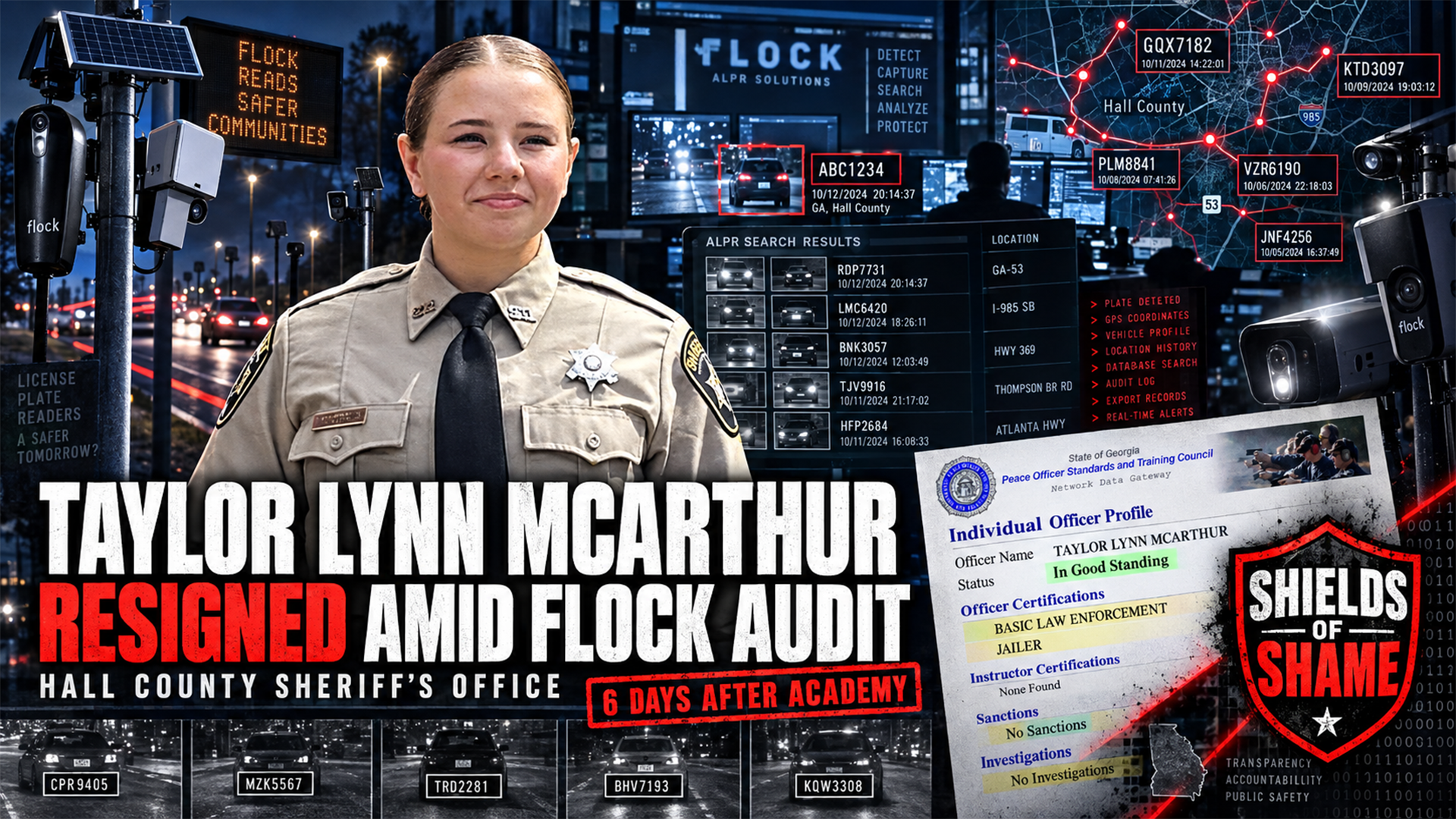
SHIELDS OF SHAME | GEORGIA FLOCK ACCOUNTABILITY | HALL COUNTY
The Taylor Lynn McArthur File: 1,049 Training Hours, Flock Access and the Hall County Sheriff’s Office Audit
Six days after completing Georgia’s 784-hour Basic Law Enforcement Training Course, Taylor Lynn McArthur reportedly resigned from the Hall County Sheriff’s Office after being notified of an investigation connected to the agency’s Flock-camera audit. A Georgia POST profile generated nearly three weeks afterward still reportedly listed her as employed and in good standing, with no sanctions or investigations. The apparent discrepancy between a reported resignation and the administrative record is a question to investigate—not proof that McArthur committed misconduct or that POST mishandled the file.
The six-day sequence
According to the supplied training transcript, McArthur completed the 784-hour Basic Law Enforcement Training Course on August 21, 2026. The reported resignation followed on August 27, 2026, after the department notified her of an investigation into alleged policy violations identified during its audit of access to the Flock automated license plate reader system.
Hall County has not publicly identified the specific searches attributed to McArthur, their timestamps, any plates involved, the purposes entered by the user or the exact policies allegedly violated. Without those records, it would be inaccurate to say she tracked a particular person, conducted personal searches or committed a criminal offense. The available account describes an employment separation amid an agency-policy investigation, not an arrest or criminal charge.
What the Georgia POST training record documents
McArthur’s supplied transcript records 1,049 training hours, including the 784-hour basic course completed August 21. The provided account says the transcript does not separately identify a course specifically titled Flock, license plate reader, privacy or database ethics. That is a statement about the titles visible in the supplied transcript, not proof that she never received ALPR training: agency instruction, roll-call briefings, vendor onboarding and combined courses may not appear under those names in a POST transcript.
That distinction is central to the story. If an employee was permitted to query a sensitive vehicle-location database, what training was required before access was granted? Did the agency document a policy acknowledgment, acceptable-use certification, login authorization and periodic refresher instruction?
Read McArthur’s Georgia POST training transcript (PDF) ↗
The employment-record discrepancy
The supplied case account says a POST profile generated nearly three weeks after the reported August 27 resignation still showed McArthur actively employed and in good standing, with no listed sanctions or investigations. Administrative records can lag behind personnel events or use status categories that do not reflect an unresolved agency investigation. A blank sanctions field is not an exoneration, and a reported resignation is not a disciplinary finding.
The way to resolve the discrepancy is to obtain the original personnel separation notice, the agency’s submission to Georgia POST, the POST record-change history, and any complaint or investigation intake. The supplied certification screenshot is reproduced here so readers can inspect the recorded fields themselves.
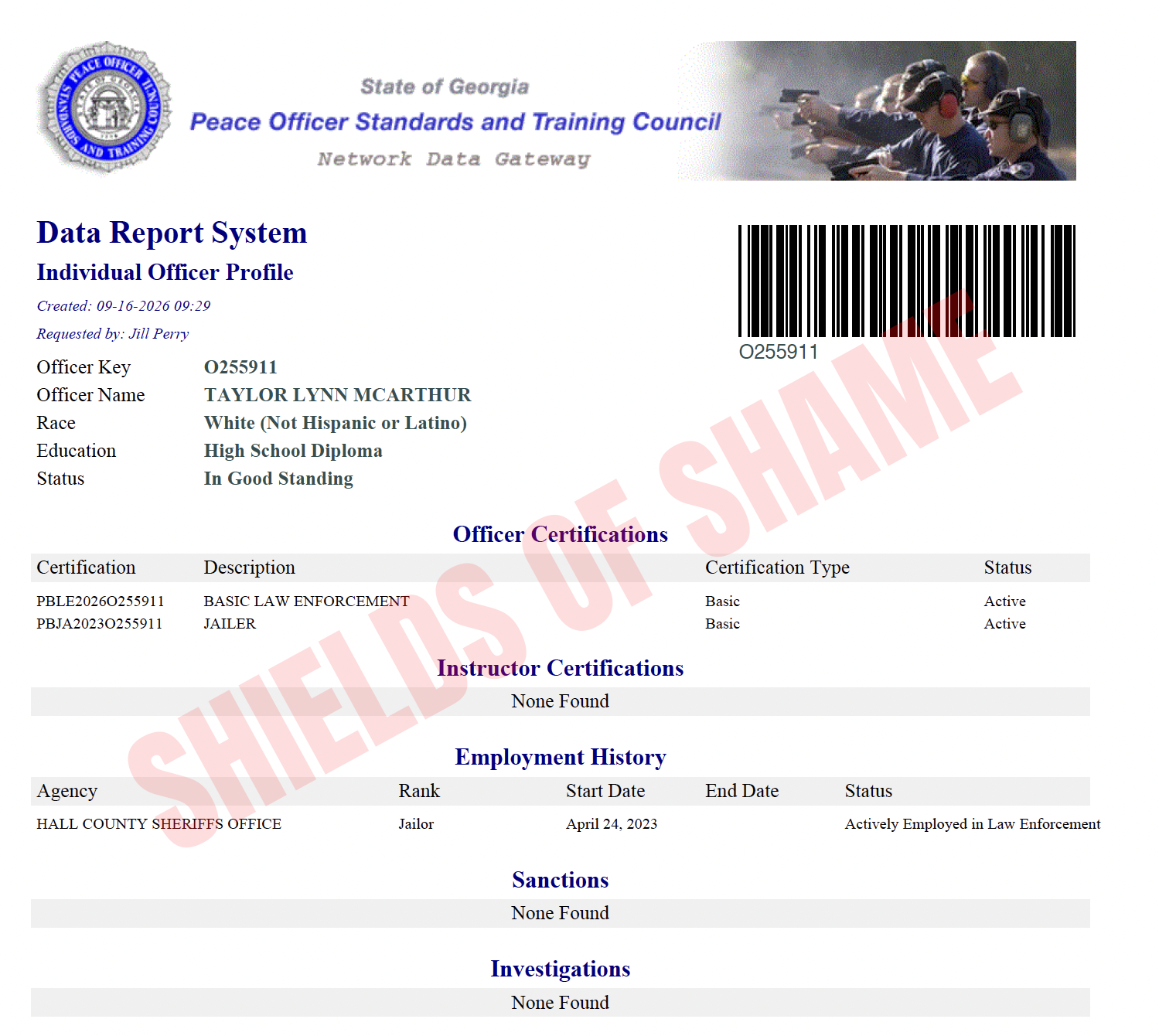
View original Georgia POST certification screenshot ↗
Why the Hall County audit deserves scrutiny
Automated license plate reader systems capture plate observations at particular places and times, potentially allowing users to reconstruct where a vehicle has traveled. Legitimate police access should be tied to a documented investigative purpose. Access auditing should identify each user, the plate queried, timestamps, stated reason, linked case number, results viewed and exports or shares. It should also establish who reviews searches by users with elevated privileges.
Hall County’s broader Flock audit has produced public reporting about multiple employees, but each case must be evaluated individually. In McArthur’s case, the disclosed facts do not yet identify the conduct that prompted the reported internal investigation. An audit flag, a resignation and a later administrative profile are distinct pieces of evidence that cannot substitute for the actual logs and investigative findings.
The questions Hall County should answer
- When was McArthur granted access to Flock, and what role or permissions did her account carry?
- Which query or queries prompted the review, and what law-enforcement purpose was entered?
- Were searches associated with documented calls for service or case numbers?
- What agency policies were allegedly violated, and when were they acknowledged?
- Did McArthur receive vendor, department or POST training specific to ALPR searches?
- Was the resignation voluntary, requested or part of an administrative separation agreement?
- When did Hall County notify POST, and what does the updated POST profile show?
- Did the audit reveal improper access, a procedural documentation problem or another policy issue?
Case chronology
- August 21, 2026: Completion of the 784-hour Georgia Basic Law Enforcement Training Course, according to the supplied transcript.
- August 27, 2026: Reported resignation after notice of an agency-policy investigation connected to the Flock audit.
- Mid-September 2026: Supplied account describes a POST profile still showing active employment, good standing and no listed investigations or sanctions.
- October 13, 2026: Shields of Shame publishes the supplied training and certification materials and identifies outstanding records.
Source document and image gallery
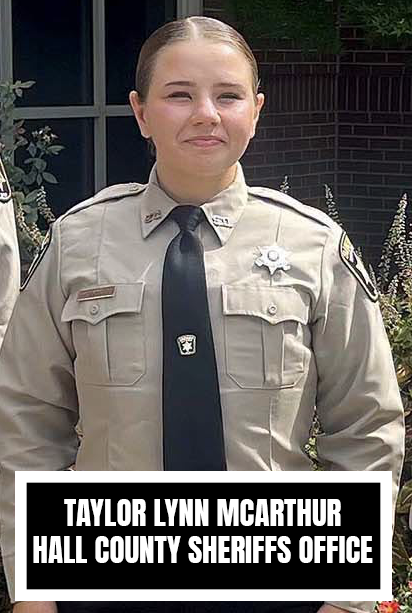
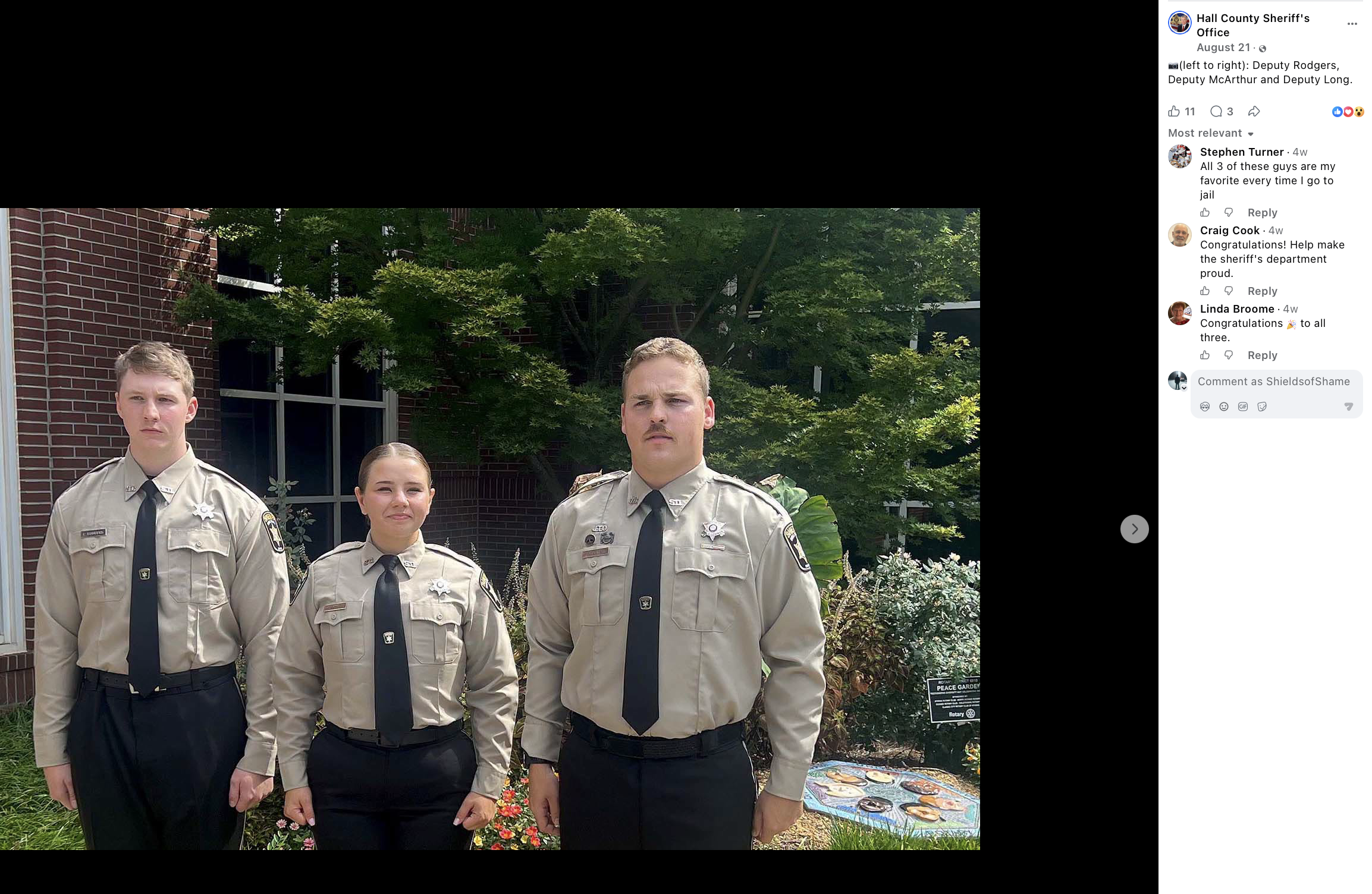
All five supplied assets are available to inspect. The transcript and certification screenshot support the discussion of training and administrative status; the remaining images are included as visual case materials.
Georgia POST training record — PDF ↗
Georgia POST certification screenshot ↗
Taylor Lynn McArthur photograph ↗
Open records: the next step
Shields of Shame recommends requesting the native Flock audit logs, account access and permissions history, any internal affairs case summary, notices to McArthur, personnel separation documents, agency ALPR policy, training rosters and acknowledgments, POST notifications, and any communications explaining when the department’s employment-status update was submitted. Requests should seek electronic files in their native format and ask for the statutory basis for any withheld portions under the Georgia Open Records Act.
Frequently asked questions
Was Taylor McArthur arrested?
No arrest or criminal charge is established by the materials supplied for this investigation.
Did she resign or was she fired?
The supplied case account reports a resignation on August 27, 2026. The actual separation document is needed to verify its formal classification.
Did she receive Flock training?
The supplied POST transcript reportedly contains no separately named Flock or ALPR course. That does not establish whether department-specific or vendor training occurred.
Does the POST profile prove she was cleared?
No. The reported snapshot showed no sanctions or investigations, but it may not reflect later updates or an agency-level inquiry.
What did the audit find?
The exact searches and alleged policy violations have not been publicly established in the materials reviewed here.
Related accountability research
Institute for Justice — ALPR abuse research database ↗
Quin’sha Lanikka Goss — Greene County Sheriff’s Office ↗
Patrick Lee Isbell — Henry County Police Department ↗
Editorial note: The case involves a reported resignation during an agency-policy investigation. A resignation is not proof of misconduct. No specific improper search, criminal charge, or POST sanction is attributed to McArthur without supporting records. Published October 13, 2026.