
SHIELDS OF SHAME · GEORGIA POST INVESTIGATION · PREMIUM CASE FILE
Kevon Devin Bonny-Milerson: A Bowling Alley Arrest, an Unreported Incident, and a Lost Certification
He was not assigned to a correctional agency when the incident occurred. But, according to the case information provided to Shields of Shame, that did not eliminate his obligation to report an arrest to Georgia’s professional certification authority.
Reporting note: The narrative below reflects the incident summary supplied to Shields of Shame. Original court and POST records are linked for examination, but their full contents have not yet been independently verified for this draft. The arrest itself does not establish a criminal conviction.
Premium evidence archive
This case includes court records, a POST case summary, professional training records and supporting images. Access restriction and direct-file protection must be confirmed before publication.
Watch: Kevon Bonny-Milerson Case Video
Watch the video provided for this investigation alongside the court documents and Georgia POST records. The recording’s full contents and context have not yet been independently reviewed.
Source: Shields of Shame case media archive. Video filename: kevon 2026.mp4.
A night at a bowling alley becomes a professional discipline case
It began with a disagreement over leaving a bowling alley. According to the account provided for this investigation, responding officers told Kevon Devin Bonny-Milerson to leave. He did not comply with those directions, argued with officers, and was ultimately arrested.
Many arrests arising from disputes at private businesses end as local criminal matters. But Bonny-Milerson had an additional responsibility: he held a professional credential subject to Georgia Peace Officer Standards and Training Council oversight. The account supplied to Shields of Shame states that he had ten days to report his arrest and failed to do so.
That alleged failure—not simply the disagreement at the bowling alley—is the pivotal professional-accountability issue in this case. According to the supplied case description, Georgia POST ultimately revoked his certification.
Why being between jobs matters
Bonny-Milerson was reportedly not assigned to an agency when he was arrested. This detail makes the case instructive. A certification is a professional credential governed by the issuing authority, not merely an employee identification card. Losing or leaving a position does not necessarily extinguish a credential holder’s continuing obligations.
Whether a specific notification duty applies depends on the relevant law, rule, certification category, and the dates in effect. Georgia POST’s published rules also impose a separate notification duty on agencies that arrest certified personnel. The individual ten-day deadline described in this case should be confirmed against the underlying POST order and governing rule before the article is finalized.
The arrest is not the same as a conviction
Three questions should be kept separate: What happened at the bowling alley? What was the outcome of the criminal case? And what did Georgia POST determine in its independent professional proceeding?
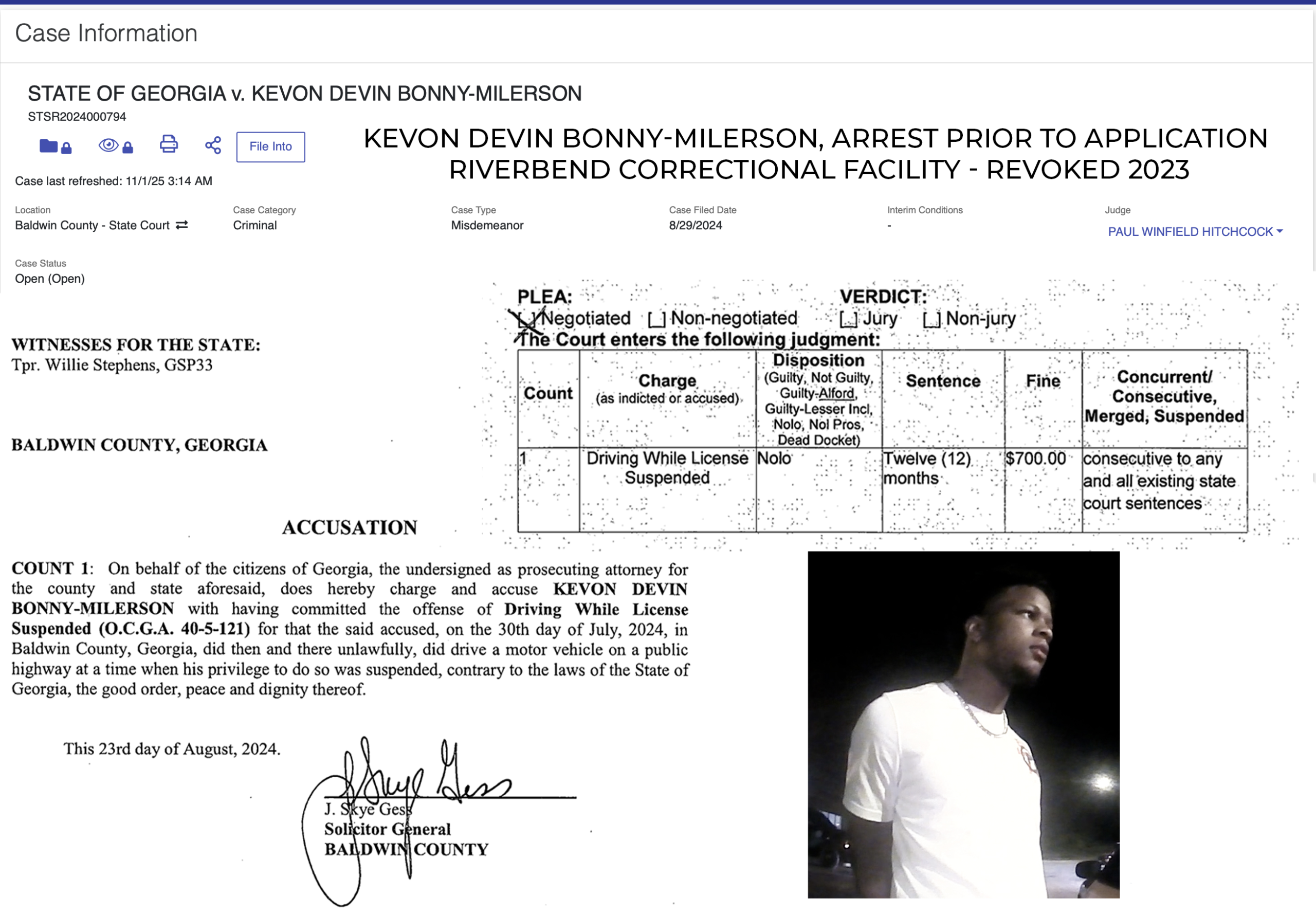
A person can be arrested without being convicted. Likewise, a licensing body may take administrative action for conduct related to a reporting obligation, even when the underlying criminal case has a different outcome. The linked court records should be used to identify the exact charge, disposition, and dates rather than assuming a conviction from the booking image.
Riverbend Correctional Facility: the professional context
Riverbend Correctional Facility in Milledgeville is a privately operated Georgia prison managed by GEO Group under contract with the Georgia Department of Corrections. The facility houses adult male offenders and is part of the state’s correctional system. This investigation identifies Riverbend as part of Bonny-Milerson’s professional history; it does not claim that the bowling alley incident occurred at the facility or while he was working there.
Georgia Department of Corrections: Riverbend facility profile ↗ · GEO Group: Riverbend facility information ↗
What Georgia POST does
Georgia POST establishes certification standards for law enforcement and other public-safety professionals, including corrections personnel. It also oversees compliance and disciplinary processes. Professional credentials can affect eligibility for future positions, making the distinction between agency employment and individual certification especially important.
About Georgia POST ↗ · Official POST rules ↗ · Certification requirements ↗
Inside the original records
Use the source documents to check the arresting agency, precise incident date, criminal charges, disposition, POST notice requirements, revocation date, and whether Bonny-Milerson had an opportunity to contest the proposed sanction. The records are presented as an evidence archive rather than as proof of any fact not independently confirmed in this draft.
The key record to verify the allegation, notification deadline, administrative procedure and final sanction.
Court filing; verify the charged offense and case disposition against the original.
Additional court records supplied in redacted form.
Additional court documents; confirm dates and docket information.
Additional court documents for independent examination.
Professional training record, distinct from the arrest case.
Image excerpt of a training record.

Officer Profiles: Katie Ascarate Gillis and Keith A. Gillis
The following are separate professional-record profiles assembled from the certification, training and photographs provided for this investigation. Their precise roles in Bonny-Milerson’s arrest have not yet been established from the available material. Inclusion here does not suggest either officer engaged in misconduct, and no connection between these two individuals beyond the supplied files is assumed.
Katie Ascarate Gillis

Profile materials include an image identified as a certification record, a swearing-in photograph and a training-history document. These records may help readers assess professional background, but certification status, employing agency, training dates and connection to the bowling alley encounter require direct verification from the underlying documents.
Keith A. Gillis
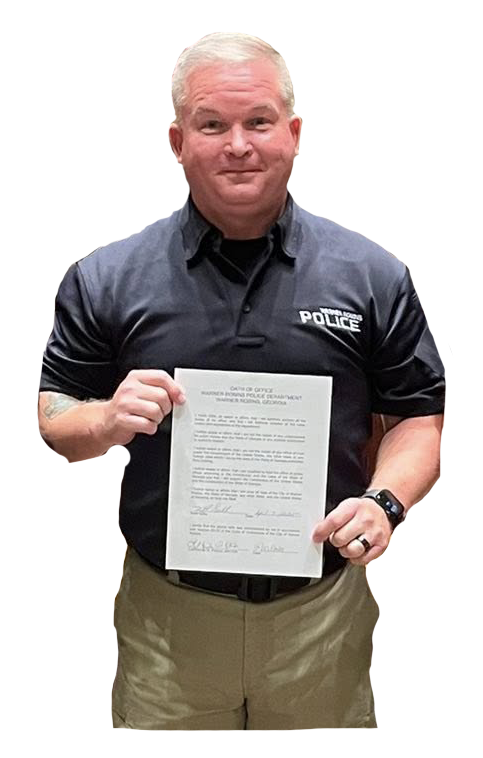
Profile materials include an image identified as a certification record, a swearing-in photograph and a training-history document. These records may help readers assess professional background, but certification status, employing agency, training dates and connection to the bowling alley encounter require direct verification from the underlying documents.
Questions readers may have
Was Bonny-Milerson convicted?
The supplied incident description establishes an arrest, not a verified conviction. The court disposition needs confirmation from the linked docket documents.
Why would POST act if he wasn’t working?
Certification and current employment are different legal and administrative statuses. An applicable reporting obligation can continue while a credential is held, even between agency assignments.
Was his certification revoked because he argued with officers?
The case account attributes the revocation to a failure to report the arrest within the specified period. The exact formal grounds must be checked against the POST order.
Does the ten-day rule apply to every Georgia officer?
Not established here. The applicable individual deadline must be tied to the relevant rule and case dates. Published POST materials also describe separate agency-reporting requirements.
Related Shields of Shame investigations
Browse Shields of Shame’s police and corrections accountability investigations ↗
Editorial standard: Arrest allegations are not findings of guilt. The professional action described here is based on the supplied case account and requires verification against the underlying POST order. Images and records concerning Katie Ascarate Gillis and Keith A. Gillis have not been incorporated because no connection to this case has been established.