Shields of Shame | Public Investigation | Georgia Corrections
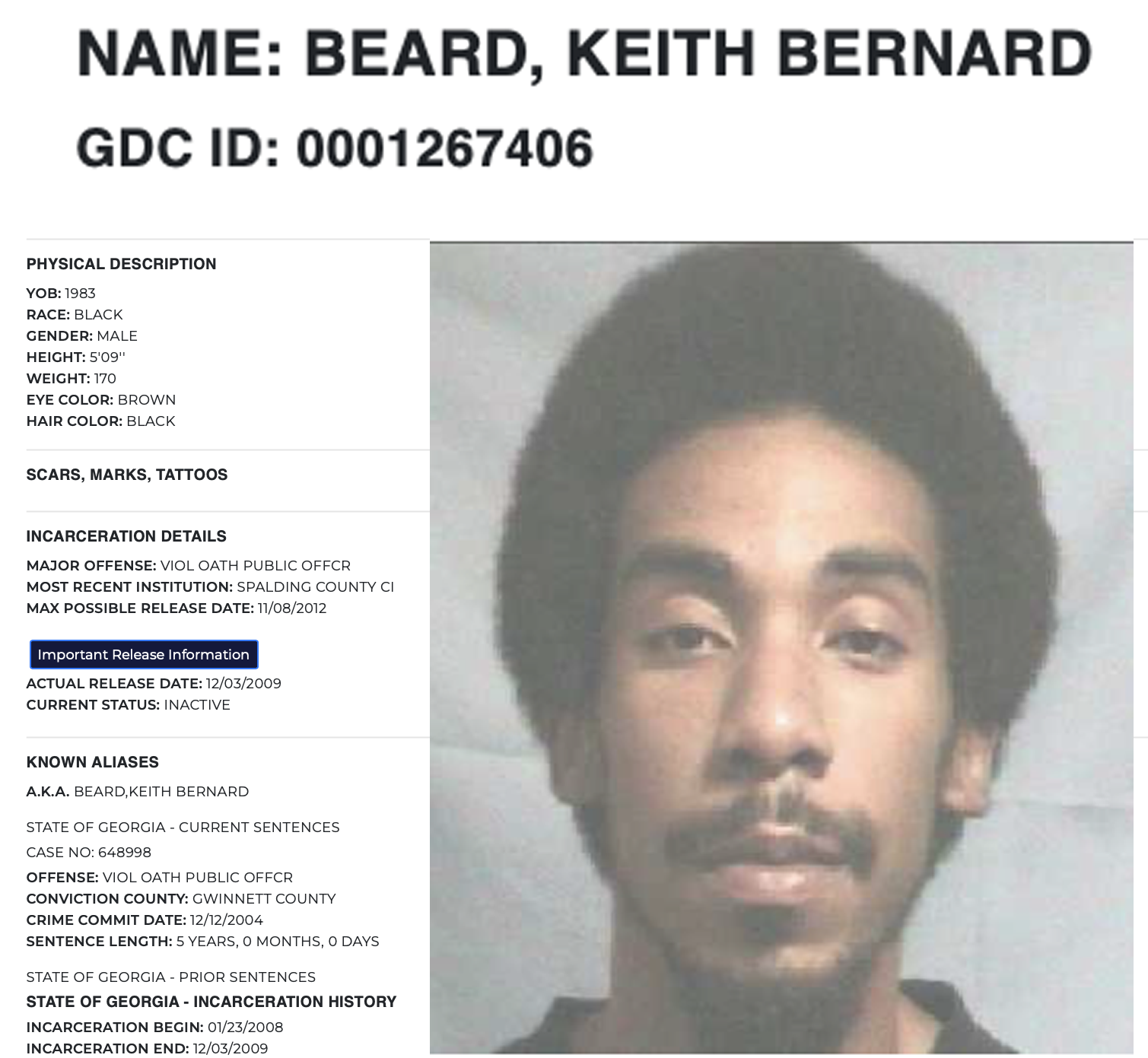
Keith Bernard Beard Jr.: Phillips State Prison corruption case and Georgia POST revocation
A Georgia correctional officer’s case raises questions about prison authority, criminal accountability and the importance of reading appellate decisions alongside initial convictions.
Case at a glance
Officer: Keith Bernard Beard Jr.
Agency: Phillips State Prison, Georgia Department of Corrections
Employment: January 2, 2004 to December 16, 2004
Separation: Voluntary resignation
POST certification: Revoked September 18, 2008
Training record: 192 hours documented for 2004
What happened?
Beard’s case concerned allegations that he demanded $5,000 from a prison inmate in connection with threatened drug charges. The matter proceeded through criminal court and Georgia’s correctional certification system. Understanding the outcome requires separating the accusations, the verdicts, and what survived appellate review.
The court outcome matters
Violation of oath of office: The felony conviction was upheld on appeal.
Improperly influencing a witness: The conviction was reversed on appeal.
Theft by extortion: The trial court directed a verdict of not guilty on that charge.
These are legally distinct outcomes. A reversed conviction should not be reported as an affirmed conviction, and a directed acquittal should not be portrayed as a guilty verdict.
Professional certification and training
Georgia POST records show that Beard’s correctional officer certification was revoked on September 18, 2008. His recorded service at Phillips State Prison ended in December 2004. The training record lists 192 hours in 2004. The dates of employment, criminal proceedings, and certification action should not be conflated.
Why this case matters
Correctional officers exercise substantial authority over incarcerated people, who may have limited means to challenge coercion or report misconduct. The criminal justice system’s treatment of alleged abuse of that authority deserves public scrutiny. This case also demonstrates why investigative reporting must follow appeals rather than stop at a headline about a conviction.
Original source documents
Explore the records below. These files are hosted on the new Shields of Shame website and open in a separate tab.
- Georgia POST case summary
Open original record - Georgia POST training record
Open original record - GDIC record image
Open original record - Certification record image
Open original record
Records and verification
The POST summary, training history, certification image and GDIC image are presented as original records, not as independent proof of any allegation beyond what the documents actually state. Court outcomes should be verified against the published appellate decision before being repeated elsewhere.
Support independent accountability reporting
Shields of Shame makes this investigation free to read. Public records research, document review and long term archival work require time and resources. Explore the Shields of Shame Vault for additional case materials and help support independent reporting.
Editorial notice: This page distinguishes allegations, court findings, and appellate rulings. Records may be incomplete and future developments may change the case history. The inclusion of a person in this archive does not establish guilt of any charge beyond the final adjudicated record.