SHIELDS OF SHAME • GEORGIA FLOCK DATABASE
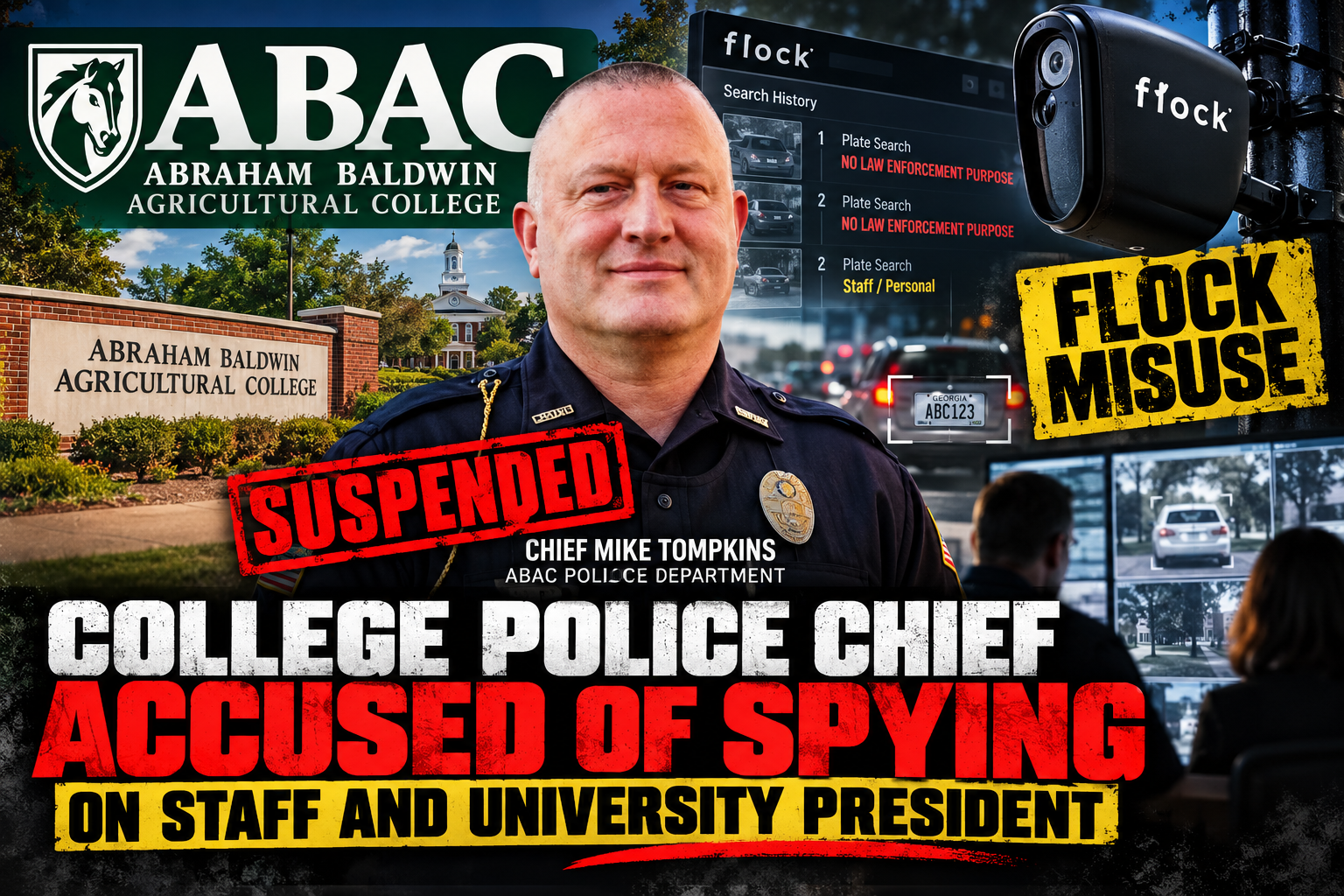
Chief Mike Tompkins Fired After Unauthorized Flock Searches: The ABAC Access Mystery
ABAC says it has no Flock camera network. A state review nevertheless substantiated unauthorized searches through another agency’s access. Who controlled the account, and where are the audit logs?
Case at a Glance
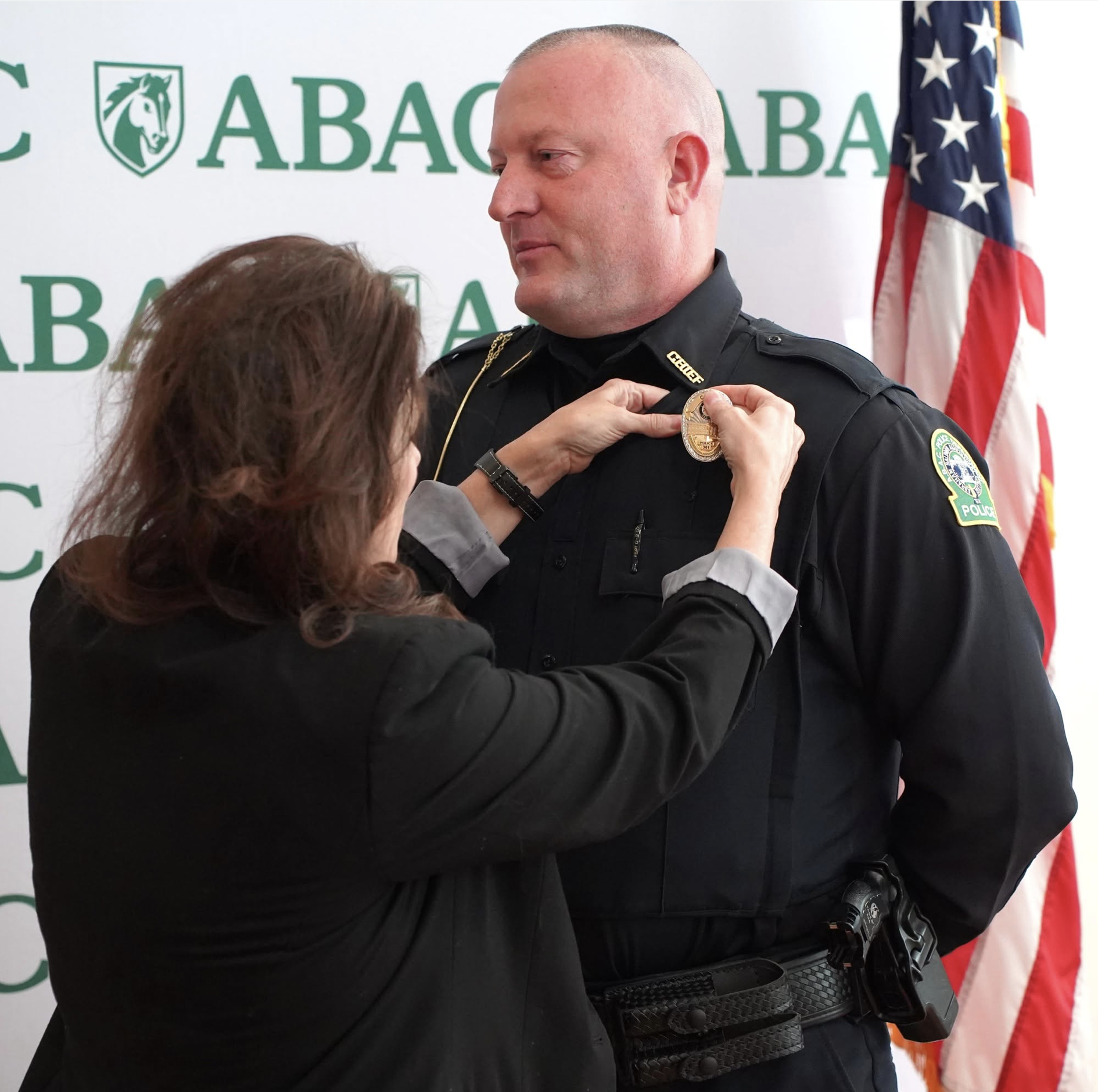
Official: Mike Tompkins (also listed as Mickie in supplied file name)
Agency: Abraham Baldwin Agricultural College Police Department, Tifton, Georgia
Technology: Flock Safety automated license plate reader database
Finding: Unauthorized law-enforcement searches substantiated in USG review
Access path: Outside local law enforcement agency, not publicly identified
Employment: Fired; Douglas Chadwell appointed interim chief October 1, 2026
Criminal case: No criminal charge or conviction established in the reviewed reporting
A Police Chief, a Surveillance Database, and an Outside Agency
At Abraham Baldwin Agricultural College in Tifton, Georgia, the controversy was not about a camera installed on campus. ABAC says it owns and operates no Flock automated license plate reader cameras or network. Yet a University System of Georgia administrative review found that an ABAC Police Department employee obtained access to Flock through an outside local law enforcement agency and performed searches that lacked an authorized law enforcement purpose. That distinction is the central accountability issue: control over surveillance data can cross agency boundaries even where the user’s employer does not operate the cameras.
What the University System of Georgia Substantiated
According to ABAC’s statement as reported by WALB on October 1, 2026, the USG administrative review substantiated improper use of an automated license plate reader system. Investigators found certain searches were not conducted for an authorized law enforcement purpose and failed to comply with state requirements governing law enforcement resources. The published summary does not specify the searched plates, number of searches, dates of every query, account permissions or identity of the agency that enabled access. The distinction matters: a sustained administrative finding is significant, but it is not permission to invent targets, motives or criminal charges.
How Tompkins Rose to Chief
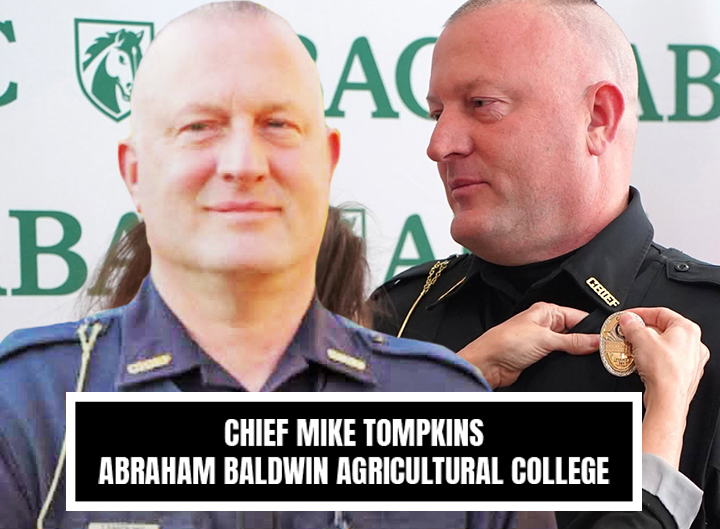
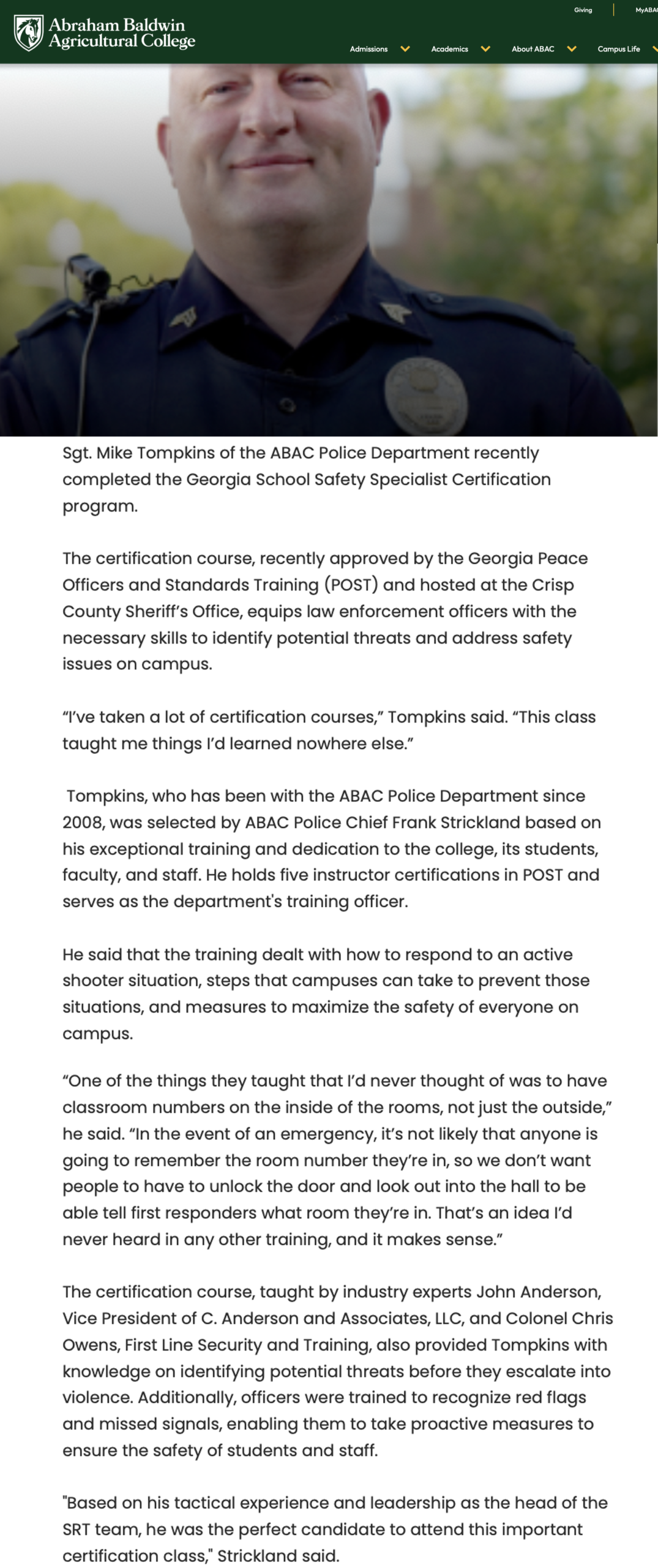
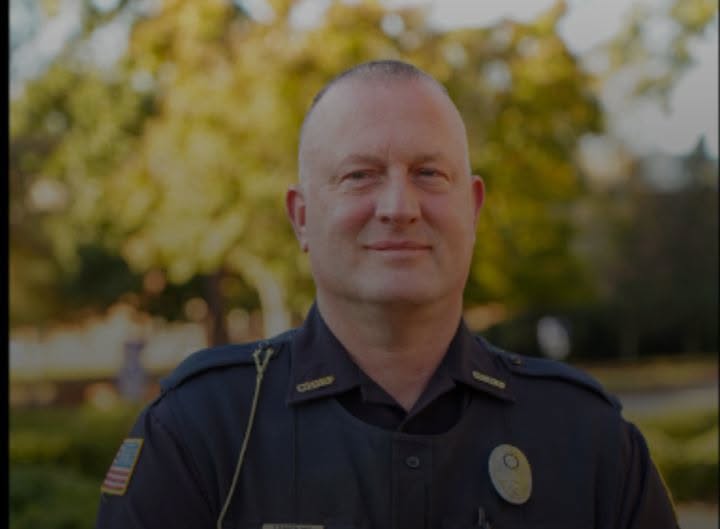
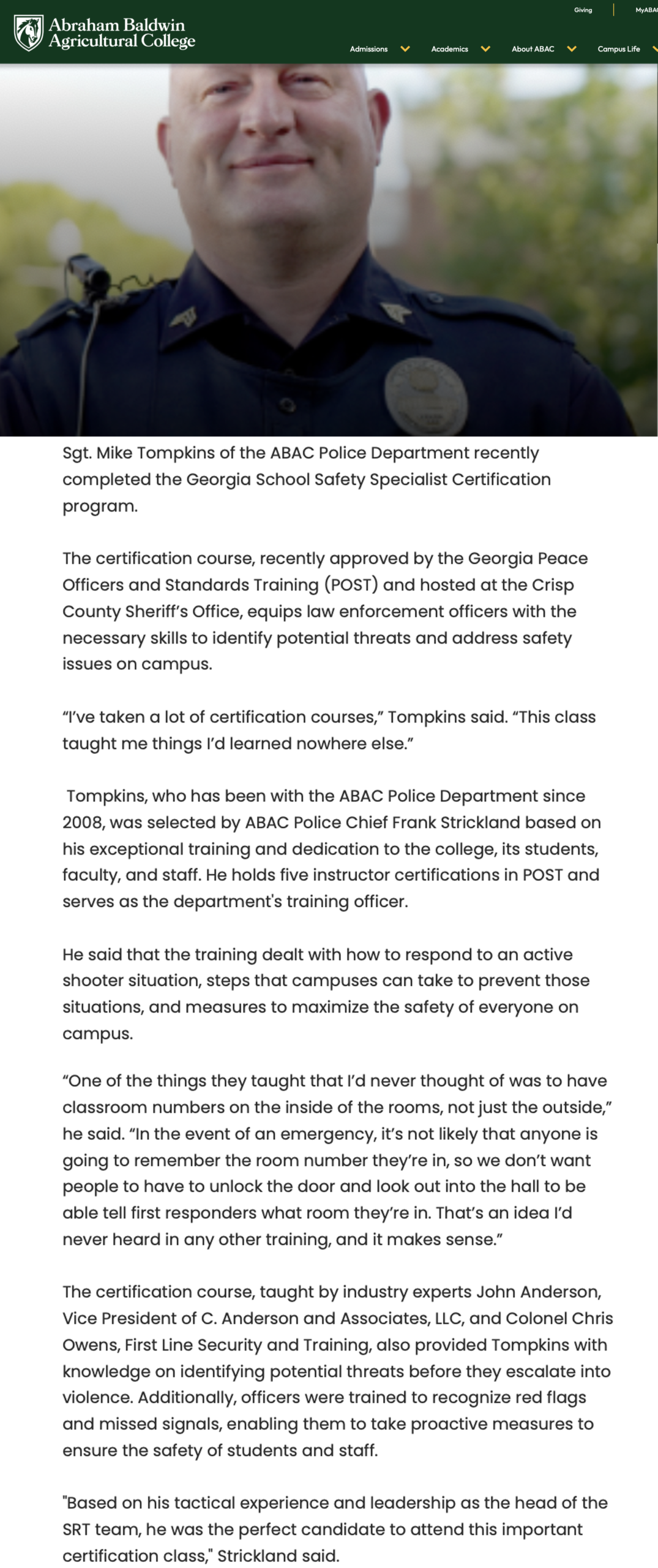
Tompkins served the ABAC Police Department for more than 17 years. Earlier college information describes his training responsibilities, instructor certifications and service in leadership roles. He became chief effective November 10, 2025 and was formally sworn in December 16, 2025. That makes the timeline striking: less than a year after taking command, his employment ended following the surveillance review. His experience makes the questions about authorization, training and oversight especially important, but experience alone cannot establish what he personally knew or intended.
From Administrative Leave to Termination
On September 29, 2026, WALB reported that Tompkins had been placed on paid administrative leave. At that time the college declined to give details. ABAC later said it received the USG findings September 30. WALB’s October 1 report identified Tompkins’ firing and said Acting Chief Douglas Chadwell became interim chief effective that day. ABAC said police and emergency response services remained operational.
The Missing Link: Which Agency Opened the Door?
ABAC’s statement points to access obtained through an outside local law enforcement agency. It does not publicly name that agency. This is not a technical footnote. Whoever provisioned or sponsored access may have records showing when the account was created, which organization it belonged to, the role or permission level assigned, who approved the arrangement, and whether any audits flagged questionable searches. The article does not identify Tift County Sheriff’s Office or any other agency as the provider without documentary proof.
The Audit Trail Is the Story
An ALPR search history can potentially reveal user accounts, timestamps, search reasons, queried plates, system permissions and data-sharing context, depending on the product and audit export. For accountability, the critical records are not only images from cameras. They are logs showing how people used the search system. SOS seeks the underlying query logs, administrator access records, user agreements, policies, audit findings and communications about referrals. Those records can test whether oversight was proactive or came only after a complaint.
Independent Reporting and Open Records
The original SOS investigation references independent coverage by Any County News and reports that the outlet pursued audit logs and encountered a Tift County Sheriff’s Office withholding decision. The underlying request, denial language and responsive records have not been independently reviewed here, so this page treats that account as attributed reporting rather than a judicial finding that records were unlawfully withheld. A defensible public-records analysis requires the actual request, exemption citations and correspondence.
A Related Tift County Case, But Not Proof of a Connection
Separately, WALB reported that Tift County Deputy Dallas Hancock was demoted and lost access to sensitive data systems after an audit found discrepancies involving Flock searches. This nearby case demonstrates why audit logs matter. It does not establish that Hancock and Tompkins worked together, used the same account or shared a motive. The cases must be documented separately.
Georgia’s Wider Flock Misuse Pattern
The ABAC findings fit a broader statewide accountability problem. In Albany, police leadership described audit alerts identifying searches involving people officers personally knew. In Gwinnett County, multiple officers were fired and arrested after a Flock investigation. Athens-Clarke County fired a civilian analyst accused of improperly searching an ex-spouse’s plate. Each case has different facts and legal outcomes, but together they demonstrate why database access must be limited, logged and reviewed.
What We Still Need to Know
Which agency provided Tompkins or the ABAC employee access? Who approved the account? Was access personal, interagency or shared? How many searches were made, and on which dates? What stated investigative purposes appeared in the logs? Who reviewed the queries? Did ABAC refer the matter to Georgia POST, the GBI or prosecutors? Did anyone affected receive notice? None of these questions should be answered with assumptions.
Records SOS Wants Preserved
Relevant records include the USG administrative report and exhibits; Flock audit exports and user-activity histories; account provisioning and permission records; data-sharing agreements; policies and training acknowledgments; administrative-leave and separation notices; referral correspondence; and any POST records or orders. Agencies should preserve responsive logs and explain any claimed exemptions in writing. Requests should avoid unnecessary publication of innocent vehicle owners’ personal identifiers.
Accountability Is About Access, Not Camera Ownership
ABAC’s assertion that it has no Flock cameras on campus is important, but it does not resolve who could search the system. The deeper lesson is that a shared surveillance network can create accountability gaps when an employee’s organization, the agency granting access and the database owner are different entities. Effective safeguards require identifiable users, authorized purposes, meaningful audits and consequences for violations.
Timeline of the ABAC Investigation
2008: Tompkins begins ABAC Police service, according to college biographical information.
November 10, 2025: Becomes ABAC chief.
December 16, 2025: Formally sworn in.
September 29, 2026: WALB reports paid administrative leave.
September 30, 2026: ABAC says it receives USG administrative review findings.
October 1, 2026: WALB reports termination; Douglas Chadwell becomes interim chief.
Document Vault: Georgia POST / Case File
The supplied PDF is available below. Its full text could not be independently extracted for this article, so no specific POST sanction or finding is attributed to it without verification.
Additional SOS Image Evidence

Related Investigations and Outbound Sources
Read the original reporting and compare how other Georgia agencies have handled Flock misuse. Each link opens in a new tab.
- WALB: USG review substantiates unauthorized searches ↗
- WALB: Tompkins placed on paid administrative leave ↗
- WALB: Tift County Deputy Dallas Hancock case ↗
- WALB: Albany Police Flock audit and firings ↗
- CBS Atlanta: Gwinnett officers arrested after Flock investigation ↗
- Atlanta News First: Athens-Clarke Flock misuse ↗
- Original Shields of Shame investigation ↗
Browse More Shields of Shame Investigations
Georgia Flock Database category ↗ · SOS Case Vault ↗ · Original Mike Tompkins archive ↗
FAQ
Did ABAC operate its own Flock cameras?
No. ABAC says it did not own, operate or maintain an on-campus Flock camera network. The review found an employee accessed the system through another local agency.
Was Chief Mike Tompkins fired?
Yes, according to WALB’s October 1 reporting, following the USG administrative review.
Do we know which license plates were searched?
No. The reviewed public reporting does not identify the plates, search count or subjects.
Was Tompkins convicted of a crime?
No criminal conviction has been established by the sources reviewed for this article. An administrative finding and a criminal judgment are different things.
Editorial standards: SOS distinguishes substantiated administrative findings from unverified allegations, criminal charges and convictions. Source images are supplied assets and are not themselves proof of the alleged conduct. Last reviewed October 11, 2026.